
How To Use Peppermint Oil To Repel Rats Naturally?
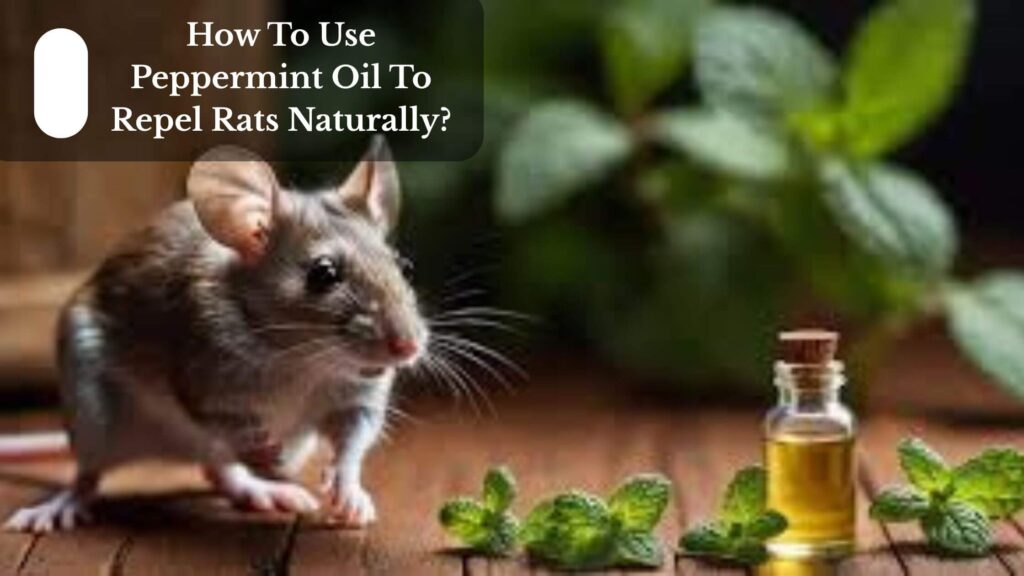
Why Peppermint Oil Works As A Rat Repellent? The repelling effect of peppermint oil on the rat is achievable mainly due to its sharp, penetrating odor that fills the very sensitive nostrils of a rat. Rats are highly dependent on smell to locate their direction, find food, and detect danger, and a strong odor of peppermint interferes with these actions and makes their way in the covered areas uncomfortable. Peppermint oil contains menthol compounds that may irritate the nasal and respiratory systems of rats, forming a sensory environment that is unattainable to them. In contrast to the chemical poisons, peppermint oil does not kill the rats and only deters them, by scaring them, not to nest or move in particular places. You may also like: It is also more attractive as a better deterrent due to its naturalness and humane character. The acuteness also has the benefit of eliminating food odors that would otherwise attract rats, making the risk of being infested less likely. How Peppermint Oil Affects Rats’ Senses? The main effect of Peppermint oil on the rats has to do with overloading their well-developed sense of smell, which is vital in their survival. Rats are known to use smell to find food, identify common routes, communicate with other rats, and signal danger. Peppermint Oil has a strong menthol smell that can upset these senses, causing misidentification. The smell can also aggravate the nasal passages and receptor organs of the rats when they meet the smell and breathe it, therefore, complicating the process of breathing and movement. This discourages them from staying or going back to treated places due to the sensory overload. Peppermint oil is also capable of interfering with the rat’s odor perception of sources of food because it disguises the food odor, and the rat is less likely to be enticed to explore the environment. Secondly, a similar effect could be caused by the irritating and cold-blooded feeling of menthol, which, in this case, will result in the instinctive avoidance mechanism because rats relate strong odors with danger. Best Type Of Peppermint Oil For Repelling Rats In selecting the most suitable peppermint oil to use in repelling rats, ensure that you use 100% pure high-grade essential peppermint oil extracted from Mentha piperita and not the diluted and fragrance grade. A higher content of menthol and aromatic compounds of a pure peppermint oil results in the creation of a strong scent that the rats are most allergic to. Get organic cold-pressed or steam-distilled oils, as they are the most likely to be high-potency and naturally composed, as synthetic oil or highly diluted oil might be too weak to keep rodents away. Oils that are labeled as having no fillers, no added additives, and no artificial fragrances would be better, as the contents added neutralize the overwhelming peppermint smell. Integrating a good brand with adequate factory sourcing details also contributes to ensuring uniformity and robustness. Although pure oil may be more costly, the grossness of its smell reduces the number of applications and also improves the outcome during use in areas that have entrances or where the baseboards, attics, or other areas where rats may penetrate. How To Use Peppermint Oil To Repel Rats Naturally? Peppermint oil can keep away rats without the need to use sound cannons since the strong aroma fills the sensitive rats. Preparation: To prepare it, combine 10-15 drops of peppermint essential oil with pure peppermint in one cup of water and a teaspoon of a mild liquid soap in a spray bottle, and shake thoroughly. Spray the areas with rat points of entry, base boards, cracks, cabinets, trash pits, as well as areas you are certain there have been droppings or gnawing. Loose cotton balls that are soaked in undiluted peppermint oil and placed in small dry bowls around holes, under sinks, behind appliances, and in garages or attics can also be utilized. Sprays and cotton balls should be refreshed after every few days, as the smell dies out with time. To achieve maximum efficiency, it is best to maintain cleanliness, close food containers, and cover crevices in steel wool or sealant. When applied regularly and correctly, Peppermint oil is a good deterrent to light infestations and not a total solution to large rat problems, both outdoors and indoors. 5 Benefits Of Using Peppermint Oil To Repel Rats Naturally 1. Non-Toxic and Safer for Homes Peppermint oil is a non-toxic, natural alternative to chemical rat poisons and is therefore safer in homes with children and pets as long as it is used properly. It harms no one by ingestion or secondary poisoning, as opposed to traps or toxic baits. This renders it the best when used indoors in the kitchen, pantry, and living rooms. It does not keep rats away by use of force but by scent, involving a more responsible and safe method of pest control. 2. Strong Scent Effectively Deters Rats The smell of peppermint oil is too potent to withstand even the sense of smell of rats. The strong smell interferes with their navigation, food location, and comfort in a place. Applied regularly in areas around entry points and nesting areas, it will push away rats and prevent new rats from entering the nearby areas. This is a natural smell-detergent that does not require physical protection or violent approaches. 3. Environmentally Friendly Solution The application of peppermint oil to scare away rats can be considered an eco-friendly alternative, which does not cause environmental pollution. This does not pollute soil, air, and water as other chemical repellents do. This would be appropriate in gardens, garages, or outdoor places where some wildlife and plants might be impacted. Use of peppermint oil will help provide a sustainable livelihood, besides controlling pests in a sustainable and earth-friendly manner. 4. Easy and Affordable to Use Peppermint oil is easy to find and not as expensive as professional pest control services. It can easily be applied in spray bottles or by the use of cotton
Top 11 Essential Oils That Heal Open Wounds Faster

Introduction: Can Essential Oils Heal Open Wounds? Essential oils have incredible benefits for wounds and scars, apart from aromatherapy and skin care. Many people are unaware that essential oils are strong and effective for healing wounds. Even though open wounds can be tricky to deal with, you can minimise their effects with the best essential oils for open wounds. That is a powerful truth and not a myth. In the upcoming section, we will explore the qualities of essential oils that make them exceptional and ideal for wound healing. You may also like: Essential oils are natural plant-based extracts that are packed in an oil form. They are treatments that help repair damaged or compromised skin to promote healing faster. Not only this, but they are quite beneficial as they are packed with anti-fungal, antibacterial, antimicrobial, and anti-inflammatory properties. One should not use it as a substitute for medical care or ointments. It just adds as an additional treatment for open wounds to speed up the healing process. Before using essential oils for open wounds and burns, you should be cautious of the safety constraints. So, let’s dive into them first. Important Safety Rules Before Using Essential Oils On Wounds There are some safety rules or precautionary tips that one should follow before using essential oils on open wounds. These points are also applicable if you use essential oils for burns, scrapes, redness, and extreme inflammation. Now that you are clear on the precautionary tips to avoid further damage, let’s understand how essential oils benefit your skin for faster recovery. How Essential Oils Support Faster Wound Healing? Essential oils are truly effective if you use them properly after consulting with your doctor. But do you know how oils intensify the recovery and healing process to prevent further damage? Well, here are all the reasons that support the healing mechanism of essential oils. A. No more discomfort or pain with essential oils If you have essential oils by your side, you’ll not feel intense pain, swelling, redness, or discomfort due to open wounds. Just use the best essential oils like lavender, peppermint, or spearmint to soothe and calm the skin. B. Regenerates tissue and cells When the skin is under the wound, it goes through a process of tearing apart tissues and cells. Thankfully, not any. The best essential oils help with the tissue regeneration process within a few uses. It builds new skin, promotes collagen production, and helps in healing wounds faster than ever. C. Offers anti-inflammatory support Inflammation is very prominent, especially after open wounds. While it is there for a reason, it deeply affects your skin texture and leads to redness and swelling. The top essential oils for fast wound healing support the skin barrier and reduce inflammation over time. D. Prevents microbial infection Did you know that several essential oils like tea tree, peppermint, rosemary, lavender, and Chamomile are packed with anti-microbial properties? These essential oils support the healing process and reduce the risk of further infection around the wounds and scars. E. Reduces the chances of scarring If you treat open wounds in a balanced way, it reduces the chances of scars and hyperpigmentation. The top essential oils for hyperpigmentation, like lavender, rosehip, jojoba, and helichrysum, are ideal for long-term scars. Top 11 Essential Oils That Heal Open Wounds Faster Are you confused among so many essential oils, back and forth, to select the best ones? Well, we are here to guide with the top picks of essential oils for open wounds. Let’s get started. 1. Tea tree essential oil One can never get over the holy grail tea tree essential oil for skin, open wounds, inflammation, burns, or scars. Known for its rich anti-microbial and anti-inflammatory properties, it reduces and prevents the chances of further infection in the skin. Additionally, tea tree oil improves the skin texture and puts it in the repair mode. 2. Lavender essential oil The floral yet herbal fragrance of lavender works in the best way possible for aromatherapy sessions. But, did you know that lavender oil speeds up skin healing and recovery with its oh-so-strong anti-microbial and anti-inflammatory properties? The rich oil also promotes collagen production in the skin, improves the epithelization process, and diminishes swelling, redness, and pain. 3. Roman chamomile oil Roman chamomile essential oil is the best solution for people with extremely sensitive and traumatized skin. It has incredible properties that heal swelling and redness in the skin without being harsh. Just use roman chamomile oil with a carrier oil to calm irritated and inflamed skin. 4. Frankincense essential oil If you need an essential oil that works for your entire skin and its disorders, try frankincense oil. It has all the goodness in it with powerful anti-inflammatory and skin-restoring properties. It helps with wound healing, improves skin barrier, and limits scarring. Use it with a combination of the best carrier oils for wounds and lavender oil. 5. Rosemary oil Rosemary essential oil is a power-packed formula of antimicrobial and anti-inflammatory oils that promote wound healing and support circulation in the body. It is best and shows results when used with carrier oils to tackle inflammation, redness, and swelling. 6. Calendula Oil Calendula oil or extract has healing botanicals, along with hydrating properties, which are a must-have for all skin concerns. If you are sensitive to wounds and burns, try calendula oil. It is best used for skin irritation, inflammation, open wounds, redness, and tissue regeneration. 7. Geranium oil Geranium oil is ideal for deep hydration and cell regeneration, especially if it is due to shaving wounds, minor cuts, or burns. You can use geranium oil to prevent inflammation in the skin, reduce bleeding, and improve the skin texture over time. 8. Eucalyptus essential oil The agitated and intense wounds are usually warm and lead to permanent bleeding patterns. However, with eucalyptus essential oil, you can battle it within a few uses as it offers cooling properties. The essential oil is used for its anti-microbial and anti-inflammatory