

Introduction: Why Oral Care Needs Natural Solutions
You have been using your regular toothpaste and mouthwash for years now. It’s been how many months since you changed your toothbrush? These are some key insights that people usually overlook for their oral care. However, today’s blog mainly focuses on natural solutions for oral care and how essential oils support it.
People often ignore oral health until a disease like tooth decay, bad breath, gum sensitivity, or cavities takes over. Until then, it’s always a lean process. However, one should not wait for these problems to occur. Just turn your solutions into natural remedies, like essential oils for oral care, for a soothing and pacifying effect.
You may also like:
Oral care is not always based on chemicals in toothpaste and mouthwash. Sometimes, or most of the time, it’s the natural remedies or ingredients that play a powerful role. For example, many toothpastes these days contain lemon, salt, neem, and other herbs for a herbal and antibacterial effect. It not only supports oral hygiene but also reduces cavity problems and tooth decay. Let’s understand more about oral health and natural solutions in a frame.
How Essential Oils Support Oral Health?
Essential oils are one of the highly rated and effective natural ingredients these days. Known for their anti-inflammatory, anti-fungal, and antimicrobial properties, they are known to support oral health in endless ways.
The concentrated essential oils are derived from the plant extracts and hold the essence to nurture your overall health. Here is how it supports your oral health and serves as an addition to flossing and brushing.
- Essential oils have aromatic compounds that naturally freshen up the mouth, eliminating bad breath.
- They reduce bacterial infection and inflammation for healthy and strong gums.
- Essential oils prevent the formation of plaque and cavities in the mouth.
- They also maintain oral hygiene and prevent several oral diseases.
The Role Of Essential Oils In Fighting Cavities
Everyone is aware of the protective nature of essential oils and how they support oral health. But here is something more to it. The best essential oils also help to fight cavities and prevent them in the long run. Let’s see how.
- Essential oils have potent antibacterial and antifungal properties that block harmful bacteria like Streptococcus mutans from entering the mouth. Once they crawl into your mouth, they hamper your oral health and can lead to tooth decay.
- The most effective essential oils control plaque with their anti-inflammatory and antibacterial qualities. It builds a fine layer on your teeth and restricts the bacteria from sticking.
- Did you know essential oils also help with healthy gums and bright teeth? Yes, you heard that right. The power-packed essential oils protect your gums, reduce the chances of oral infections, and keep cavities at bay.
- Cavities often lead to bad breath and odour in the mouth. Thankfully, not anymore. Essential oils neutralize and fade the odor with their incredible properties.
Top 9 Essential Oils For A Cavity-Free Smile
Essential oils are a great support for oral health. Let’s see which ones contribute the most.
1. Cinnamon Essential Oil
Cinnamon essential oil secures the first place amongst the top essential oils for oral health care. The antibacterial, antifungal, and powerful properties of cinnamon oil support oral hygiene. It has a very strong aromatic profile that is soothing on the gums. The essential oil cuts off microbes that trigger cavities in the mouth. Additionally, it possesses a strong aroma that cleans teeth and wafts away the odor.
2. Tea Tree Essential Oil
Tea tree essential oil is known as the OG oil that supports your health in endless ways. Not only does it nurture your body, but it also keeps your oral health in check by preventing the formation of plaque and cavities. Tea tree essential oil is packed with anti microbial anti fungal and anti-inflammatory properties that improve gum health and tackle bad breath.
3. Clove Essential Oil
Another highly rated essential oil for dental care and oral hygiene is clove oil. You might have seen clove as one of the primary ingredients in every other toothpaste and mouthwash. Well, all thanks to its oral health qualities and benefits that make it a powerful choice these days. The essential oil is ideal for tooth pain, tooth decay, and plaque formation. Just use it in a diluted form and avoid swallowing.
4. Peppermint Essential Oil
A cooling essential oil that naturally freshens breath and battles foul odor is a must-have. Peppermint essential oil is one of them. It has cooling and complex compounds like menthol that maintain oral hygiene, reduce cavities, fight bacteria, and tackle bad odor. Peppermint oil is added to various toothpastes for its unique aroma and naturally cooling taste. But as experts, we do not recommend you try it individually, as it can lead to side effects.
5. Eucalyptus Essential Oil
Eucalyptus essential oil is mostly found in mouthwash and mouth rinse as it has powerful properties that prevent gum and throat infections. Studies have found that eucalyptus essential oil has antibacterial and antimicrobial properties that fight fungal and bacterial infection that degrades your oral health. Additionally, it also maintains oral hygiene and freshens up the breath.
6. Thyme Essential Oil
Thyme oil is another unique natural ingredient that is widely used in dental care products for its active compounds and strong properties. Known for its antibacterial and antimicrobial action. It effectively prevents the formation of tooth decay and plaque.
7. Spearmint Essential Oil
Cooling essential oils like spearmint and peppermint are known for their wonderful properties for oral hygiene. However, spearmint is a mild version of peppermint and is great for killing bacteria in the mouth. Spearmint essential oil is ideal for people who have sensitive oral health,h as it supports fresh breath.
8. Lemon Essential Oil
Citrus oils aren’t your regular diffuser oils. There are multi-purpose oils with unique properties that benefit your oral health in several ways. Lemon essential oil is one of them. It helps with clearer and brighter teeth,h along with fresh breath. Lemon oil also eradicates the formation of bacteria in the mouth. However, since it is very strong, one must always use it after proper precautions and expert advice.
9. Myrrh Essential Oil
Myrrh oil is another great addition to your oral care routine, as it contains an active compound called thymol. This compound mainly prevents the buildup of plaque in the mouth. It also supports oral hygiene in the long run and prevents bacterial accumulation.
How To Use Essential Oils Safely For Oral Care?
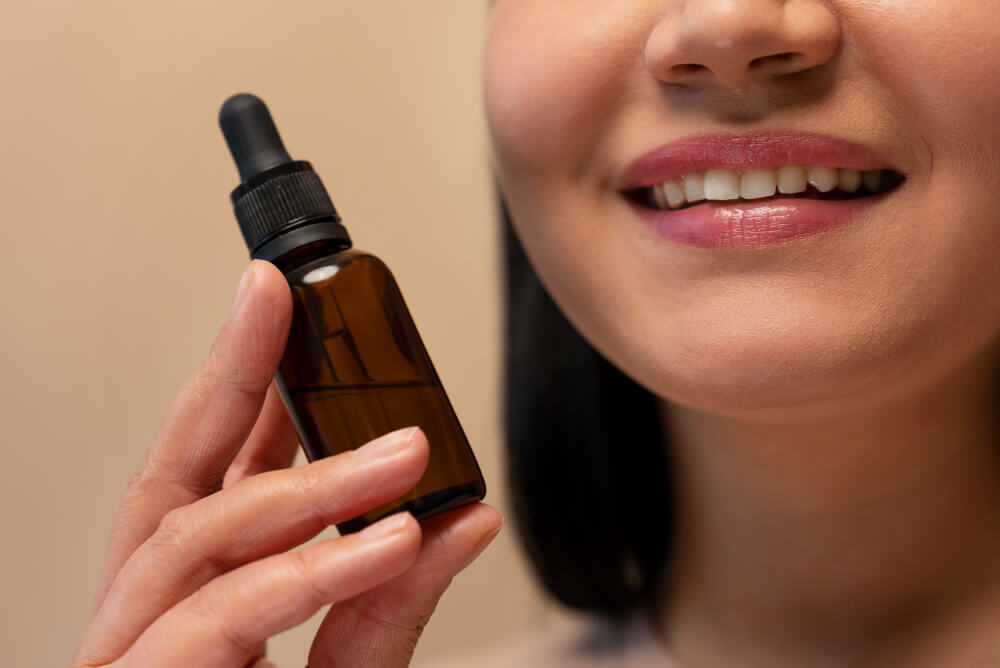
The top essential oils for oral hygiene are a must-have, but only if you know how to use them. Here are the safest ways to include essential oils in your oral care routine so that it does not affect your health and are still beneficial.
1. DIY Mouth Freshener/Rinse
- Did you know you can make your very own mouth freshener using essential oils with this DIY? Here’s the remedy.
- Combine 1tsp baking soda or salt with one cup of warm water.
- To this combination, add two drops of clove essential oil. You can also use peppermint or tea tree oil.
- Just swish the mixture in the mouth for 20 seconds and then spit it out.
- Do not swallow this combination, as ingestion of essential oils can lead to toxicity.
2. Oil Pulling
You can also try oil pulling with extra virgin coconut oil and a drop of any essential oil mentioned above.
Precautions And Safety Tips
- Essential oils are only for external use and should never be ingested.
- Store essential oils out of reach of children and store them away from other products.
- Some essential oils can be fatal to pets; therefore, always research before using them.
- Essential oils must ALWAYS be diluted before applying to the skin, as they are highly concentrated and can cause irritation. You can dilute them with a carrier oil of your choice, and the maximum concentration of Essential oils should be 3-4%.
- Always do a patch test before applying to larger areas of the skin.
- It is unclear what effects essential oils have on pregnant and breastfeeding women. While some consider them safe, many doctors advise pregnant women to avoid the use of fragrance oils.
- Always buy pure essential oils and do not buy fake counterparts, as they won’t contain the same therapeutic benefits.
Benefits vs Traditional Oral Care Products
- The benefits of essential oils for oral hygiene are endless.
- It supports your oral health with an antibacterial action to prevent infections.
- Essential oils are natural plant extracts, so they do not cause any side effects if used after proper dilution and safety tips.
- The best essential oils for oral care support your oral health in the long run and prevent tooth decay and gum sensitivity.
- On the other hand, traditional oral care products are great.
- But they’re made using several ingredients, including chemicals, sometimes.
- These traditional products, however, are clinically proven for cavity protection and other oral health concerns.
- So one should not choose between the two. Instead, combine both of them to get the best out of it. The best oral care products with hints of essential oils or herbs are ideal for oral hygiene.
You may also like:
Conclusion
We’re nearing the end of the oral care series, and it’s safe to say that essential oils actually work. The best essential oils for oral health and hygiene control bacteria, reduce bad breath, and aid in oral hygiene. So use top-quality essential oils and keep the expectations real to bring in the best for your oral health. At Moksha Lifestyle, we procure high-quality essential oils that are antibacterial in nature and prevent oral health concerns.
FAQs
1. Which oil is best for cavities?
As per research and studies, peppermint oil is known to be the best one to fight cavities and bacterial infection in the mouth.
2. Is there any home remedy to prevent tooth cavities?
To prevent tooth cavities, you can try several home remedies, like –
- Oil pulling with extra virgin coconut oil.
- Applying clove oil or tea tree oil after dilution.
- Rinse the mouth with salt water.
- Adding neem leaves to your diet.