
What Is Essential Oil Procurement?
The entire sourcing, procurement, and management of the sources of natural essential oils, such as leaves, flowers, fruit, roots, bark, etc., is called essential oil procurement. It includes supplier sourcing (both reliable and not so reliable), oil quality and purity checks, oil price and oil negotiation, and abiding by industry standards and regulations.
When it comes to choosing the end result, there are several factors to take into consideration, such as the way it is cultivated, the method used for harvest, the eco-friendliness, and its certification. The achievement of superior quality essential oils is indispensable when producing and crediting cosmetics, aromatherapy products, pharmaceuticals, food products, and personal care products.
Ideally, procurement personnel will carry out supplier audits and lab testing or quality control to guarantee authenticity and to prevent any possibility of contamination.
Why Is Strategic Sourcing Important for Cosmetic Brands?
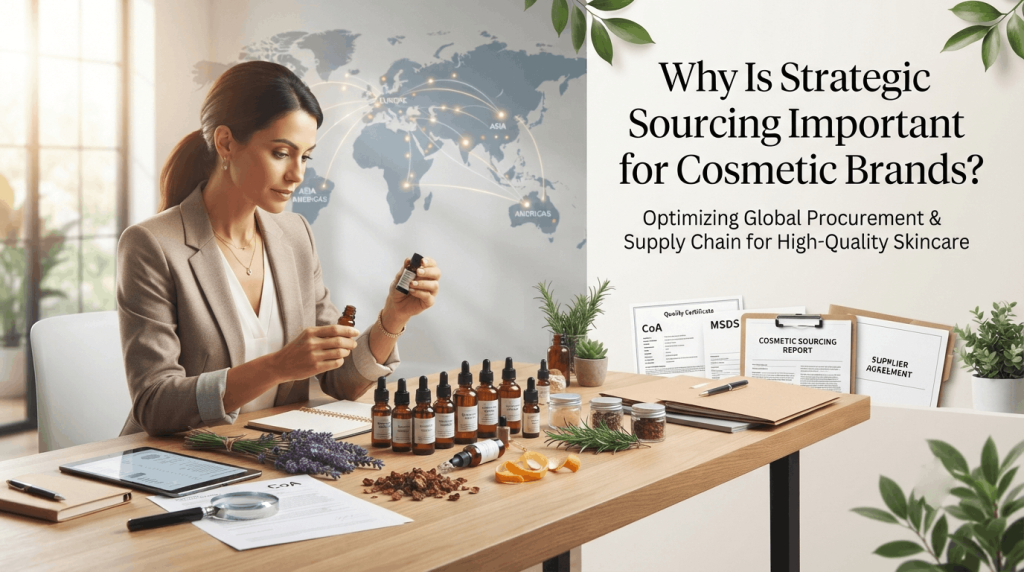
Some of the other primary reasons cosmetic brands use strategic sourcing are that it helps them to guarantee a constant flow of top-notch ingredients, packaging, and manufacturing resources, reduces risk, and optimizes costs. By sourcing appropriately and managing relationships with suppliers, cosmetic companies will be able to guarantee that the product quality meets the regulations and adjust to the changes in the market.
Strategic sourcing also assists brands in building solid relationships with their trusted vendors, which have the potential to provide them with better prices, innovation, and transparency within their supply chain. In a market where sustainability and ethical considerations are gaining weight, brands are able to get access to and source ingredients responsibly and environmentally friendly packaging materials.
You may also like this:
Key Factors to Consider When Procuring Essential Oils
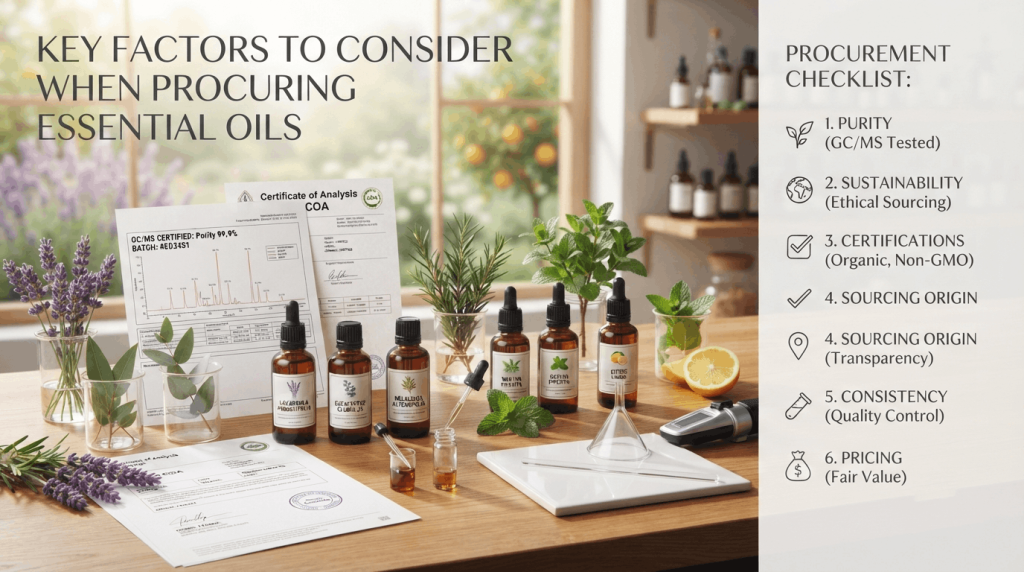
- Purity: One of the most important factors to take into account during the procurement is the purity and authenticity of essential oils. It is important for buyers to exercise caution on the quality and purity of the oil they are purchasing, as it may contain synthetic fillers, additives, and/or contaminants. Authentic essential oils will offer the desired therapeutic and aromatic characteristics, while adulterated oils can reduce the quality of the oil and effectiveness of the therapeutic properties.
- Geographical Conditions: The quality of essential oils is considerably affected, depending on the geographical origin and growing conditions of plants. The chemical composition of the oils is influenced by climate, soil character, altitude, and manner of cultivation. Materials from trusted areas with a reputation for cultivating certain botanicals mean it’s possible to ensure their consistency and quality.
- Extraction Method: Can have a significant effect on the quality and effectiveness of essential oils. There are a number of processes used, such as steam distillation, cold pressing, solution extraction, etc. Good oils are usually extracted in ways that will help to maintain the natural chemicals of the plant. Along with this, it is important for the buyer to assess whether the extraction method is applicable to their plant of choice and if it preserves the purity, strength, nature, and purposes of the oil.
- Product Quality: The experience and reliability of the supplier is another critical selection factor – it helps to guarantee a reliable supply and consistent product quality. Industry-major companies may have information on their products, such as testing reports and quality certifications. Assessments like ratings of customer reviews, industry experience, and adherence to international standards can help gauge reliability. A reliable supplier will be more likely to have clear and open sourcing methods, technical support, and be able to deliver important oils on schedule.
- Quality Testing and Certifications: Thorough quality testing is required to ensure the quality of essential oils and their safety. Wisely done suppliers carry out laboratory analysis, including [GC-MS] testing, to ensure purity and to detect contaminants. If the facilities are certified under organic production, sustainability, or quality management, this is another indicator of compliance with industry standards.
- Packaging and Storage Conditions: The essential oil should be properly packaged and stored, and it plays an important role in maintaining the integrity and shelf life. Premium oils should be kept in good-quality dark glass or appropriate containers, which should shield the oils from light, heat, and oxidation. When purchasing, the buyer must examine how well the supplier is tracing, estimating, and packing the products to ensure stability.
- Price factor: Price is key, but it is also important to consider the cost and value of the commodity purchased, and ensure a consideration of overall value rather than the lowest cost. An extremely low quality, low quality, and/or unethical sourcing practice is indicated by a very low-priced essential oil. The price is the most important factor, but not the only one, to compare when purchasing; you should also compare the purity, the standards that are in place for the chemicals, the certifications the supplier has, and the reliability of the supplier.
How to Evaluate and Select Essential Oil Suppliers?
Before choosing and evaluating an essential oil supplier, it is important to consider the quality of the essential oil supplies, sourcing practices, certifications, and reliability of the supplier. The first and most important step is to check if the supplier offers oils that are free from additives and chemical dyes and boast laboratory testing reports like the GC-MS, which confirms with laboratory analysis that they have a pure essential oil with no additives.
Review the sources from which the raw material is being sourced to make sure it is a sustainable and ethical practice. The presence of certifications (e.g., organic, ISO, GMP) may signal that the product follows well-acknowledged quality standards. Additionally, transparency on extraction practices, ingredient details, and traceability of the ingredients from the supplier should be considered.
Customer feedback, reputation in the industry, and industry experience can give a ton of information about the supplier’s credibility and consistency. When ordering large quantities, first-class samples should be ordered so that there is an opportunity to test drive for their aroma, quality, and performance.
You may also like this:
CONCLUSION
Moksha is an established Wholesaler, manufacturer, and exporter of essential oils and other Essential oil products in India. Depending on the intended usage, it offers the most genuine essential oils of only the highest quality. They contain no chemicals, additives, or fillers. Furthermore, this does not include synthetic colors, synthetic preservatives, or synthetic fragrances. In other words, that makes them excellent for everyday use. Practically speaking, while the essential oil is 100% natural, it is prudent to use a carrier oil before applying it to the skin because of the high concentration level. We carry out several tests and quality checks to make sure only the best and the real essential oil is delivered to you. The delivery packaging of the products also meets the exacting quality requirements to ensure optimal results upon use. Not always do consumers go ahead and make payments through our portal; however, when they do so, they are satisfied with the secure payment. Get the best value for money when you purchase essential oils online from Moksha within your specifications. Castor oil can be ordered for use on the face to combat dark circles, lighten skin, boost hair growth, relieve arthritis pains, and improve digestion. Find the castor oil price per Kg and even buy this essential oil in bulk.
FAQs
Q1. What are the essential oil requirements of quality and testing?
The quality of the essential oils on the market comes in the form of essential oil standards. Testing reports, e.g., GC-MS analysis, should be provided for chemical composition and to check for possible adulteration by suppliers. Various tests are added to ensure the safety of heavily processed items, such as microbial contamination, pesticide residue, and heavy metals. Conformance to international standards allows for performance and reliable cosmetic application.
Q2. However, what are the vital Certifications Cosmetic Brands ought to search for?
Usable suppliers should have a known certification that will prove to cosmetic manufacturers that quality and compliance with regulatory standards are maintained. Some of the important certifications are Cosmos for natural cosmetics & organic cosmetics; GMP certification for manufacturing practices; and ISO 9001 certification for quality management. These certificates help in the assurance of product integrity, sustainable sourcing, and quality in line with industry standards.
Q3. What are two Cost Optimization Strategies? What is Bulk Purchasing?
Optimizing costs when ordering bulk essential oils requires judgment for the appropriate balance between cost, quality, and reliability. Brands will be able to make long-term agreements, buy in bulk to get reduced prices, and group their orders to cut the shipping costs. The creation of an effective relationship with suppliers, accurate demand forecasts, and direct supply from producers can amplify cost efficiency measures and preserve product quality as well.