
Introduction
India’s wellness industry is booming and essential oils are at the heart of this revolution. Nowadays, there are more people turning to natural products over chemical based products for skincare, haircare, home fragrance and stress relief. This growing demand has created a genuine opportunity for those who wish to enter into a meaningful and profitable business. That’s why we have build the guide on how to start essential oil business in India.
If you are looking to launch an essential oil business in India, this guide will take you through all the steps, starting from research to launch.
Why is it best to start essential oil business online in India?
Essential Oil Business is a good opportunity in India because of the following reasons:
- India has a long association with natural oils as it is used in Ayurveda and this lends instant credibility to local brands.
- Aromatherapy market is growing worldwide and Indian manufacturers are emerging as trusted exporters of essential oils and carrier oils.
- Essential oils can be used in many ways such as skin care, hair care, candles, soaps, diffusers and massage therapy.
- The low initial investment requirements when compared to other manufacturing businesses.
- Excellent profit margins with the right sources and sales.
YOU MAY ALSO :
Step by Step Guide to Start Essential Oil Business in India
Step 1 – The first step is to do some market research and pick your niche.
The biggest error that new business owners make is jumping in without researching the situation. Essential oils come in numerous sub-categories. That’s why it is difficult to have a strong brand when you are trying to be everything to everyone.
A few specialty choices to consider:
- Oils that focus on the skin – Lavender oil, Tea Tree oil, Rosehip oil
- Oils used for hair care – Rosemary, Peppermint, Argan
- Aromatherapy, relaxation – Eucalyptus, Chamomile, Ylang-Ylang
- Fragrance blends for the home and diffuser blends.
- Oils for massage and spa treatments
- B2B supply – bulk sales to soap manufacturers, cosmetic brands and spas.
Once you have a clear path you will have an easier time managing your branding, marketing and product.
Step 2 – Develop a simple business plan
No need to go to 50 pages of a document, but clarity in the basics is required. The following are the key points that should be included in a simple essential oil business plan:
- The people who will buy your product/service (who are you selling to).
- Product range (which oils, sizes and blends).
- Plan for acquiring materials (self-sourcing or purchasing from a supplier).
- Prices and anticipated profits.
- The sales channels used (website, marketplaces, retail, export).
- Plan for the first half year.
This plan will also be useful if you are going to go to investors or apply for a business loan in the future.
Step 3 – Determine Your Business Model
There are three popular methods for getting into the business, each with a different amount of investment.
1. Manufacturing From Scratch
Oils are available in two types. Either they are steam distilled or cold pressed by you. It takes machinery, raw materials, quality testing and a lot of capital to do this. This is best used for large scale production.
2. Private Labeling
You purchase pure oils from a trusted essential oil manufacturer like Moksha Lifestyle and package and market them using your own brand name. This is the quickest and cheapest to begin with as you do not extract anything.
3. Reselling or Dropshipping
You sell products from an already established brand, but without repackaging. This helps in reduced margins and minimal up-front investment.
For many newbies, private labelling is the most cost-effective, fast and controllable method of brand creation. That’s why many new business owners seek an established supplier they can rely on for quality.
One such manufacturer that Indian entrepreneurs are regularly drawn to is Moksha Lifestyle. They provide pure and tested essential oils in bulk and offers private labeling services, thus eliminating much of the uncertainty for the beginning entrepreneur.
Step 4 – Legally Register Your Business
Going without proper registration can cause issues in the future, particularly if it’s for the purpose of scaling. The following is a list of the typical items you will need:
Scale
Register as sole proprietorship, partnership or private limited company depending on scale.
GST Registration
If your turnover is above the prescribed threshold, it is mandatory to register for GST. Also, it is beneficial even before that for credibility in the eyes of the business.
MSME/Udyam registration
Access government schemes, loans, and subsidies to small businesses.
Trademark registration
This will help you to protect your brand name and logo from being copied.
FSSAI license
Only needed if your oils are being sold for consumption or food application.
Cosmetic manufacturing license
If you are making (not just packaging) products for topical usage on the skin or hair you will need this license.
The compliance burden is significantly less if you are just private labelling and reselling pre-manufactured oils.
Step 5 – Source High Quality Essential Oils
This is the step that determines the fate of your brand. Bad quality oils result in poor ratings, low return business, and a poor reputation that is difficult to recover.
When choosing an essential oil supplier in India, check for:
- Oil is free from adulteration by Purity certification – GC-MS (Gas Chromatography-Mass Spectrometry) test reports.
- Use of fresh ingredients – Request samples from various batches prior to purchase.
- Bulk pricing – Suppliers with tiered pricing can assist you to scale profitably.
- Private label services – Custom labeling, bottling and packaging under your brand.
- Export documentation support – If you are thinking of selling outside the country in the future, this will be helpful.
- Transparent sourcing – Suppliers that can explain where and how the oil is being sourced.
Moksha Lifestyle is an essential oil supplier in India that has a specialization in bulk purchase. The company helps the new brand owners and make it easier for them to start a new business. This allows the owners to get his or her product off the ground without having to run an entire extraction facility.
Step 6 – Focus on packaging and branding
Essential oils are primarily a visual sale, particularly online. Your packaging should scream purity, safety and professionalism the moment it is seen.
Things to do right in packaging:
- Bottle type
Dark amber or cobalt glass bottles will help to prevent degradation of oils when exposed to sunlight.
- Labeling
Name of the ingredient (botanical name), extraction method, directions for use, and precautions.
- Dropper or orifice reducer
This helps to avoid overuse or spillage.
- The batch number and manufacturing date
This information is very important as it helps to establish trust and may be mandated by law.
- Brand logo and consistent colour scheme
Makes it easier to recognise your brand across your range of products. Packaging doesn’t have to be costly, but it should be purposeful and cohesive.
Step 7 – Set Up Your Sales Channels
When your products have been created, you need to determine where you will be selling them. Most of the successful essential oil brands in India are using the following channels:
- Your own website – Provides you with complete control over branding and customer information.
- E-commerce – Amazon, Flipkart, Meesho for wider reach.
- Instagram and Facebook Channels – Great to advertise your products visually.
- Local retail and wellness stores – Physical presence builds local trust.
- B2B supply – Selling to spas, soap makers and other small brands.
- Exporting marketplaces – IndiaMART, Alibaba, or contacting foreign customers directly.
Starting with two or three channels and doing them well usually works better than spreading thin across everything at once.
Step 8 – Price Your Products Correctly.
Pricing essential oils without any maths is one of those things that new business owners do wrongly. Consider these factors:
- Raw material cost, sourcing cost.
- Packaging and labeling cost
- Platform fee (if selling on marketplaces).
- Shipping and logistics
- Your desired profit margin (typically 30-50% in this industry when sourced smartly).
- Analyze competitors’ prices, but don’t price yourself out of business.
- People buy essential oils due to their credibility and perception of value rather than low cost only.
Step 9 – Market Your Brand
A marketing strategy for an essential oil company should be educational rather than promotional. They should not sell their product directly from customers’ perspective. Follow these tips –
- Blogs, videos on benefits, usage and safety build credibility.
- Collaborate with wellness and skincare influencers to promote your product/service.
- Email marketing – Useful to encourage repeat business and customer retention.
- Customer reviews and testimonials, encourage people to post their before-and-after photos/experiences.
Step 10 – Compliance and Safety Labeling.
Essential oils are strong, and safety isn’t optional. Ensure that you have a label and your site.
- Before applying to skin dilution instructions.
- Patch test recommendations
- Storage instructions (cool, dark place).
- Warnings of pregnancy, child and pet where applicable.
- Clear statement if the oil is not for internal consumption.
- It builds credibility and protects your legal rights against misuse claims.
Common Mistakes to Avoid
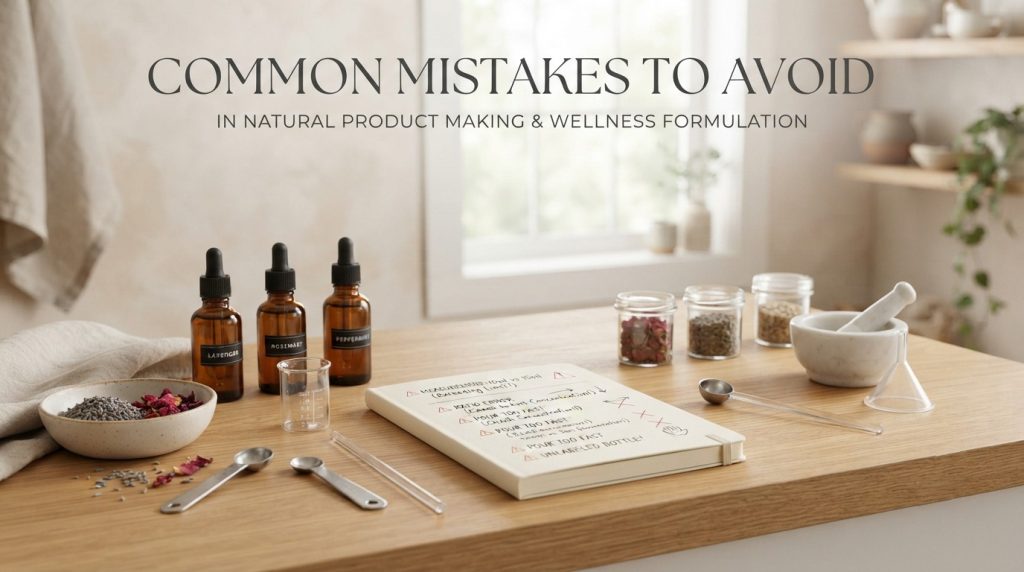
As a new essential oil business in India, here are some common mistakes that you should avoid.
- Skipping testing for cost-saving purposes.
- Pricing copy from competitors but not knowing your own margin.
- Not packaging until last minute.
- Trying to launch 20 products at once instead of starting focused.
- Not reading supplier certification carefully before bulk order.
YOU MAY ALSO:
Final Thoughts
Starting an essential oil business in India isn’t complicated once you break it down into clear steps. The real difference between brands that succeed and those that fade away usually comes down to two things. It is sourcing genuinely pure oils and staying consistent with branding and quality. Get those two right, and the rest of the business becomes much easier to build. To source, 1005 pure and organic essential oils in India visit Moksha Lifestyle.
Frequently Asked Questions
- How much capital is required for starting an essential oil company in India?
A private label essential oil business can start with as little as ₹50,000 to ₹2,00,000, covering bulk oils, packaging, and basic branding. Full-scale manufacturing requires significantly more, often ₹5,00,000 and above, due to machinery costs.
- Do you require an permit (license) for selling essential oils in India?
Yes, at least you will need business registration and GST registration. You need a cosmetic manufacturing license if you manufacture your own product. Reselling and private labeling of pre-manufactured oil products have less regulation.
- Is private labeling a good option to start essential oil business in India?
Private label allows you to start selling a product under your own name with oil products purchased directly from an existing company. There is no need for machinery to extract them yourself. It is by far faster, cheaper and allows testing of market before scaling up.
- How to verify a genuine essential oil supplier in India?
Here are some requests one should make –
Request a GC-MS report, ask for sample products, ensure consistent batch quality. Find out if they disclose information about extraction processes and sourcing practices.
- Which essential oils are most popular to sell in India?
Lavender, tea tree, peppermint, eucalyptus, and rosemary are among the most popular, largely due to their skincare, haircare, and aromatherapy uses.
- Can I import essential oils from India?
Indeed, India is an exporter of essential oils worldwide.
You need an IEC (Import Export Code) and proper documentation and quality certifications for international buyers. At Moksha Lifestyle, we export essential oils to US, Spain, Japan, Mexico and other countries.
- How long does it take to start seeing profit?
It does vary, but most private label essential oil businesses begin seeing steady sales within 3-6 months if you do marketing and quality right from day one.