
Find Your Balance: Pulse Points And Essential Oils
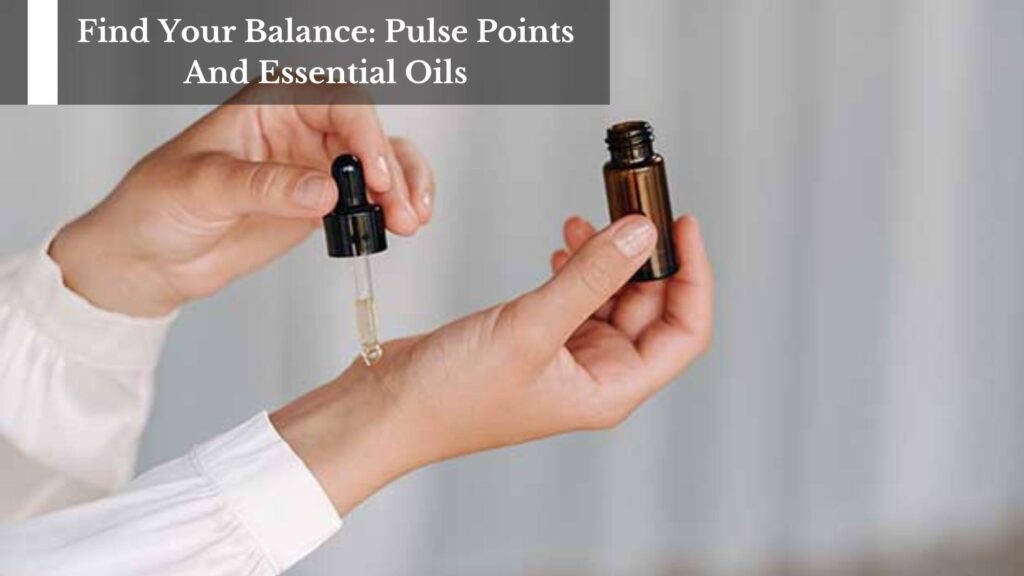
Pulse points are the specific places on the body, usually in both palms and soles of the feet, where energy can be felt to the highest degree. For example, if you place your left hand on your heart while placing your right hand on the bottom of your belly, you would feel a strong pulse in both hands. This is because these areas are closer to our organs than others. Essential Oils don’t just smell amazing – they help balance our emotions and bring peace when it’s needed most. There are over one thousand different types (and counting) that can be used as a natural way to manage emotional instability or mental focus. The nose knows best and can tell you if the scent is right for you. Not all essential oils are created equal. Some smell stronger than others, while others don’t smell at all. Best Pulse Points On The Body For Essential Oils: 1) Palms of the hands and the top of the feet are most open to absorbing oils. This is why anxiety, stress, and depression can be noted quicker if placed at these points. Lavender, basil, grapefruit, and lemon are the best scents for neutralizing anxiety. 2) Right below the earlobes, right on top of your collarbone, is where you feel a slight vibration in energy. When you have a headache or just need to relax, this area is perfect for mixing ginger and frankincense oil. You may also like: 3) The sternum (breastbone) is one of the most sensitive areas in terms of energy flow. For girls, the breasts are a very sensitive area. You can’t have enough of it! Put a drop of lavender and vetiver in between your breasts to start the day off right. 4) The center of where your stomach meets your body is another great place to apply oils. 5) The back of the neck is another great area that can be treated with essential oils. You can apply them to this area and it will relax you at the same time that it purges toxic energy. 6) Your ankles are another spot to try out essential oil therapy. It’s supposed to help soothe post-surgery soreness and aches – especially when applied topically at this point. 7) The bottoms of our feet are highly sensitive to energy and blood flow. Different Ways To Apply Essential Oils On Pulse Points: 1) Diffuse essential oils into the air with one of these aromatherapy diffusers. This is a great way to purify the air we breathe. Aromatherapy diffuser benefits include more focus, better sleep, and less stress. 2) Put a drop on your wrist or behind your ears. This is a great way to calm down those who are having trouble sleeping because you can notice it right away if it’s too strong for your liking. These spots react more with the skin and allow your sense of smell to kick in easier. 3) Rub it on your hands or feet. You can rub the oil on your feet before bed and slip on socks to allow the oils to absorb for a better night’s sleep. 4) Put a drop on your clothing and around your neck. This will help you to feel relaxed as you walk about the room, campus, or whatever else you may be doing. 5) Shower with it! It works best in the shower because that is where we wash off most of our toxins. Best Essential Oils Used On Pulse Points: 1) Lemon Essential Oil Lemon essential oil help you feel energized and focused. The smell of citrus oils has been proven to improve memory, focus, and attention. It’s also great for anxiety because it stimulates enzymes in the liver that give the body an increased supply of energy and improves circulation. 2) Lavender Essential Oil This is used for many different purposes, including sleep support. The lavender essential oil has also been shown to be effective at alleviating stress and depression. If lavender can help your pallet relax, it can help you! 3) Peppermint Essential Oil Peppermint essential oil is good for everything from relieving arthritis pain to helping people who suffer from headaches or migraines. This is an all-star essential oil, and one that’s great to use any time of the day. It’s a favorite among dorms because you can put it in your room to help you fall asleep faster. 4) Frankincense Essential Oil This oil has been used for thousands of years throughout history. It’s very popular with monks who wear it in their ritual incense as a way to absorb wisdom from the universe. This is also helpful for people who need more focus, and concentration, or just want to feel calmer and happier. 5) Cardamom Essential Oil Cardamom essential oil is often used by those who are feeling anxious or stressed because of its calming effects on the body and mind. It helps to relieve headaches, improve sleep, and clear the mind. It makes a difference in any situation that you can be feeling anxious about. 6) Sandalwood Essential Oil Sandalwood essential oil is a favorite among females who use it for menstrual cramps, vaginitis, body odor, or just plain old stress associated with heavy metal toxicity. This is an all-star essential oil that’s great to have on hand no matter what your purpose is. If you are having trouble breathing at night because of concentrated toxins in your bloodstream, this is a very good choice for you! Just put it right behind each nostril or on the soft area between your nostrils until you feel better. 7) Ylang Ylang Essential Oil Ylang Ylang essential oil can help you feel relaxed and better rested. It’s often used to help ward off depression because of its ability to relieve anxiety and improve your sleep at the same time. It’s also great for improving mood swings, helping with mood support, and as an antidepressant that helps get rid of cravings. You may also
Zen Mastery: Best Essential Oils For Yoga
Zen mastery is an ancient art using essential oils for various purposes. Essential Oils for yoga can be an excellent means to use aromatherapy during yoga and also, many are plant-based, making them safe for children. In this post, we will share some of the best essential oils: relaxation, harmony, and grounding. Yoga poses vary from a simple seated position to a complicated arm balance. It’s no surprise that yoga is often correlated with meditation – calm breathing as well as muscular control all have positive effects on the mind. That’s why it’s important to take care of your body before you start your practice, which is where essential oils come in! You can apply the oil directly onto your skin or diffuse it in the air near you. Yoga practitioners in the know use this ancient practice to enhance their routines and deepen their focus. There are many oils to choose from, but here are some of the top favorites for yoga. You may also like: Best Essential Oils For Yoga Practice: 1) Lavender Essential Oil Lavender essential oil is a wonderful essential oil to use for yoga. It’s well known for its relaxing properties and is often used as a sleep aid or to combat anxiety. It can also be applied directly onto the skin or added to your bath water. You can also diffuse it before practice to set a tranquil mood. Use this in your yoga room, on the mat, or your body – anywhere you want! 2) Passion Flower Essential Oil This flower essence is very useful for relaxation and introspection. It can be used topically or added to your bath water. The combination of lavender and passion flower is also a favorite for meditation, yoga, or sleep! 3) Sandalwood Essential Oil This essential oil is known for its grounding abilities. It can be compared to a calm, steady hand. It helps with focus and concentration as well as inner strength. Sandalwood is a good choice for postures that require balance and internal focus like back bends or poses where you’re focusing on breathing. 4) Chamomile Essential Oil This type of flower essence is most effective when diffused in the air because it’s easy to apply directly on the skin and its calming properties are potent when applied directly on the skin. It’s also good for meditation and relaxation. 5) Ylang Ylang Essential Oil This flower essence has a sweet odor that can be used as both a relaxing fragrance and for meditation. Ylang-Ylang Essential Oil can be applied directly onto the skin or diffused in the air near you. 6) Geranium Essential Oil This flower essence is ideal for inhaling, but geranium oil can also be applied directly onto the skin or diffused in the air near you to help with concentration and focus. 7) Roman Chamomile Essential Oil This flower essence is ideal for you if you want to focus on your breathing or the energy of the room. It can be diffused in the air to help calm your nerves while you practice. 8) Bergamot Essential Oil This type of flower essence is a well-known aphrodisiac because of its uplifting properties. Bergamot Essential Oil can be diffused for yoga or applied directly onto the skin. 9) German Chamomile Essential Oil This flower essence is a good choice for those with mental stress or insomnia. German Chamomile Essential Oil is also an excellent way to promote relaxation that can be used on the skin or diffused in the air during yoga practice. 10) Basil Essential Oil Basil Essential Oil is an excellent choice for attaining focus, concentration, and balance during your yoga routine with its grounding and earthy aroma. Try this in your yoga room, on the mat, or on your body – anywhere you want! How To Use Essential Oils For Yoga Practice? Step 1: Choose your essential oil or blend – There are several ways to use essential oils during yoga. The first is to apply the oil directly onto the body, either in a neat blend or diluted with a carrier oil like coconut oil. The second method is to add it into a diffuser and let it do its work. The third way is also, most importantly, by inhaling the aroma for its calming and focusing properties. Step 2: Select your method – As we mentioned above, there are three ways you can use essential oils when practicing yoga. You can put the oil directly on your body, add it to a diffuser or inhale the aroma when you’re in your poses. To apply the oil now to your body, choose an area that is covered with clothing, like the back of your neck or wrists. Just make sure that it is not exposed to sunlight for extended periods. If you’re using a diffuser, first add water and then a few drops of oil into the diffuser and turn it on. If you’re planning on using an essential oil in a yoga class, try taking a few drops of the essential oil and placing them into one of those necklace pouches that have holes in them and go around your neck. DIY Recipes Of Essential Oils Good For Yoga: Recipe 1: For Restorative Yoga Ingredients: Method: Recipe 2: For Meditation And Yoga Ingredients: Method: You may also like: FAQs: 1) Are essential oils better or scented candles during yoga? Candles or aromas are good to use during yoga practice. Candles can help you to unwind and can also be useful as a distraction from your focus while practicing. 2) How often should I reapply essential oils? When you feel that your skin is getting dry, apply a few drops of the oil on the skin’s surface and rub it in gently. When you don’t apply it for an extended period, make sure to reapply some essential oils on the skin to maintain its healthy glow.