
Introduction
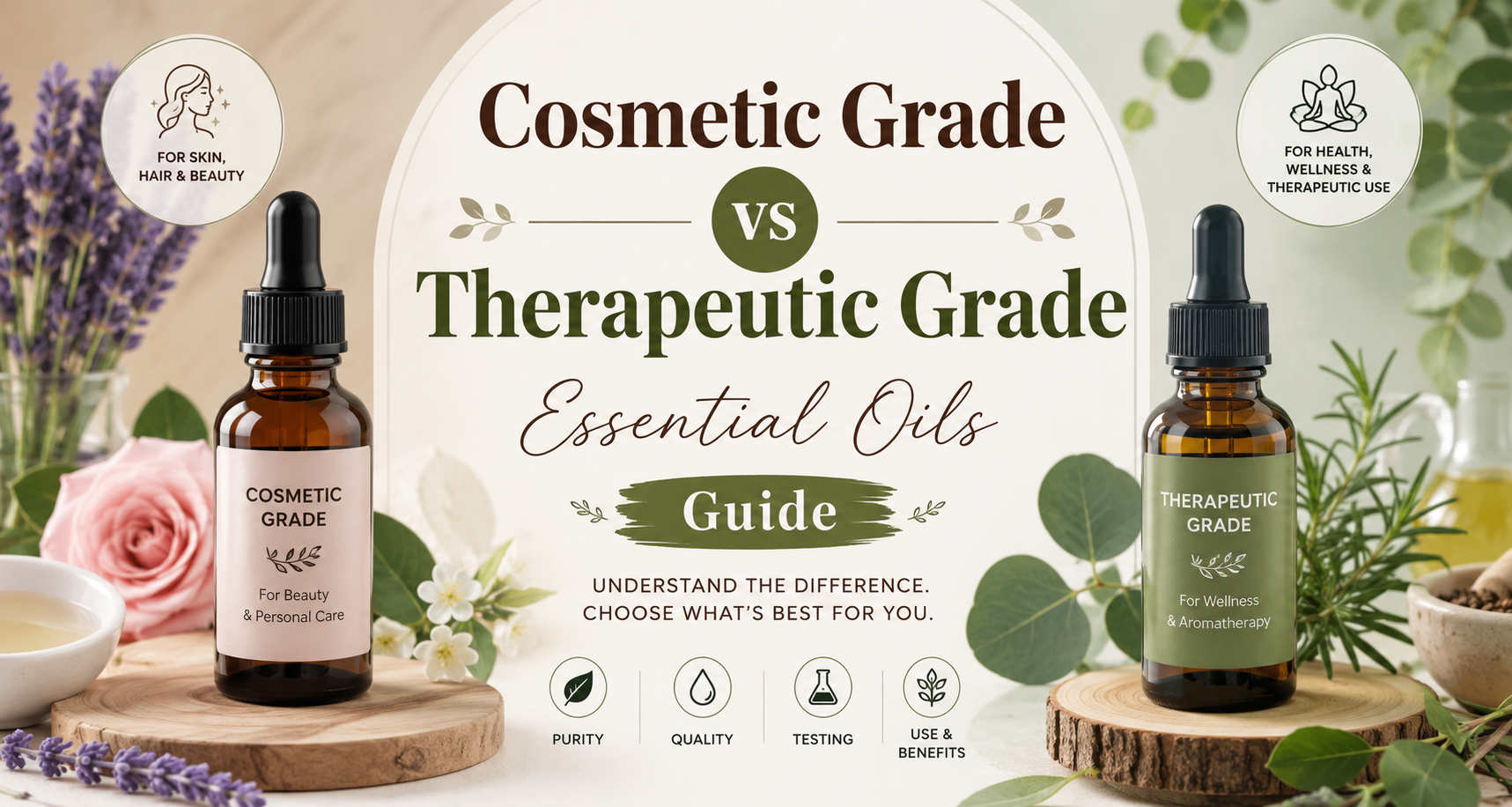
While browsing through a retail shop or a web page selling wellness products, have you ever come across hundreds of ‘100% pure’ or ‘premium quality’ essential oils? However, not all essential oils are designed for the same purpose. While some are formulated for therapeutic and wellness purposes, others are developed for beauty and perfume-making applications. Hence, the term cosmetic or perfume-grade and therapeutic-grade essential oils.
If you are confused about which essential oils to buy and use for beauty and wellness purposes, this article will help you. The article helps you identify the key differences and explains why there is a need for different essential oil grades. In addition, the article also outlines how to identify cosmetic or perfume-grade essential oils. Along with this, it also highlights the strategies that can help you identify therapeutic-grade essential oils so that nothing misleads you while purchasing products.
What are Essential Oil Grades?
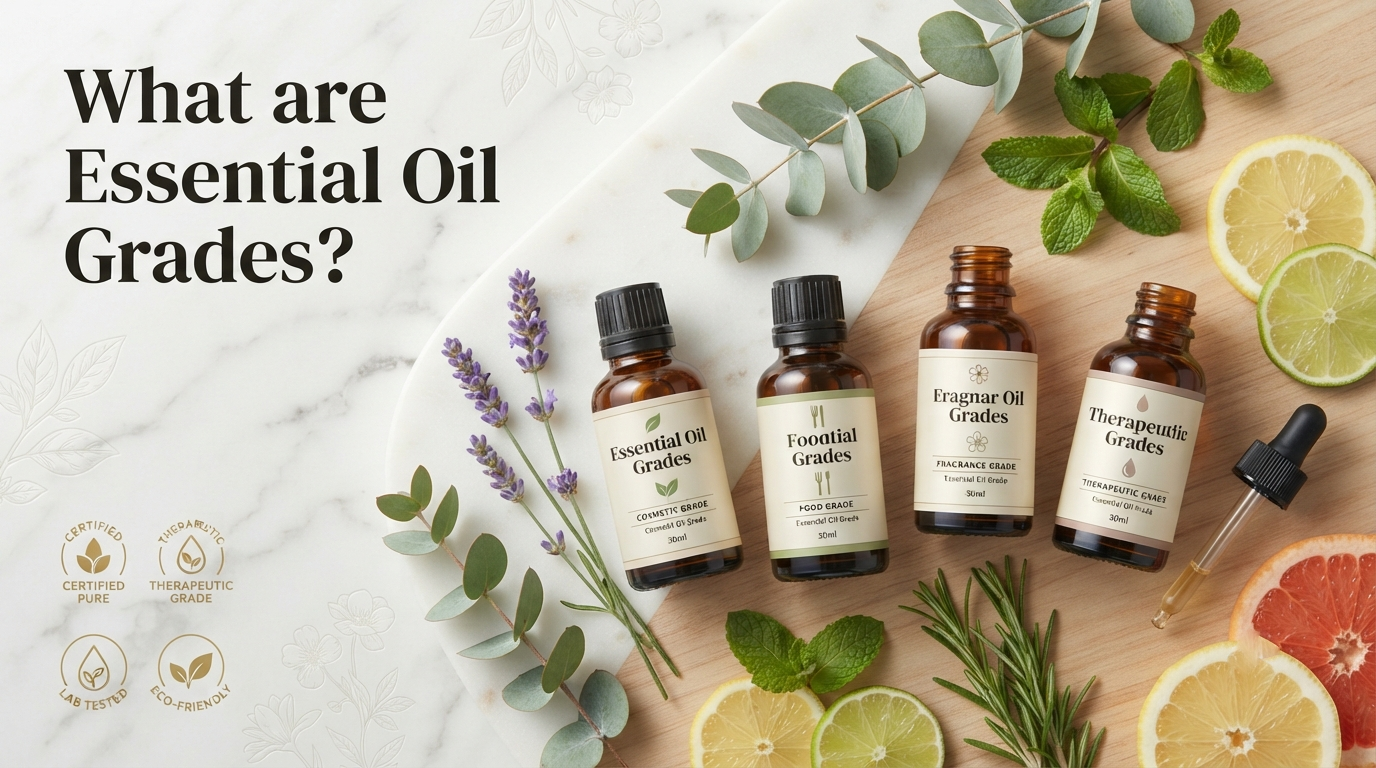
Essential oil grades generally refer to the purity, production process, and purpose of the essential oil. The classification of grades may differ depending on the different essential oil companies. It is because there is no worldwide regulatory authority. Essential oil grades generally fall under the following categories:
- Therapeutic-grade essential oils
- Food-grade essential oils
- Cosmetic or perfume-grade essential oils
- Industrial-grade essential oils
- Synthetic or fragrance-grade essential oils
Each of these classifications determines the kinds of essential oils that are fit for a particular purpose. Understanding the different essential oil grades helps ensure that one does not waste money on products that are not required. In addition, it also helps prevent the use of a particular essential oil for a purpose that it was not intended for.
You may also like this:
What are Cosmetic Grade Essential Oils?
Cosmetic-grade essential oils generally refer to essential oils that are primarily used in the production of beauty products such as shampoo, lotions, cosmetics, perfumes, creams, and other related products. Essential oils that fall under this classification are normally diluted with carrier oils. They are combined with other additives to make them suitable for topical application.
This type of essential oil is produced through a lower-standard production process and mixed with synthetic ingredients. This makes them last longer and have diverse flavors and quality. The dilution process makes this essential oil unfit for therapeutic application. But it is appropriate for making cosmetics and combining with other ingredients to create a desirable scent and consistency.
What are Therapeutic Grade Essential Oils?
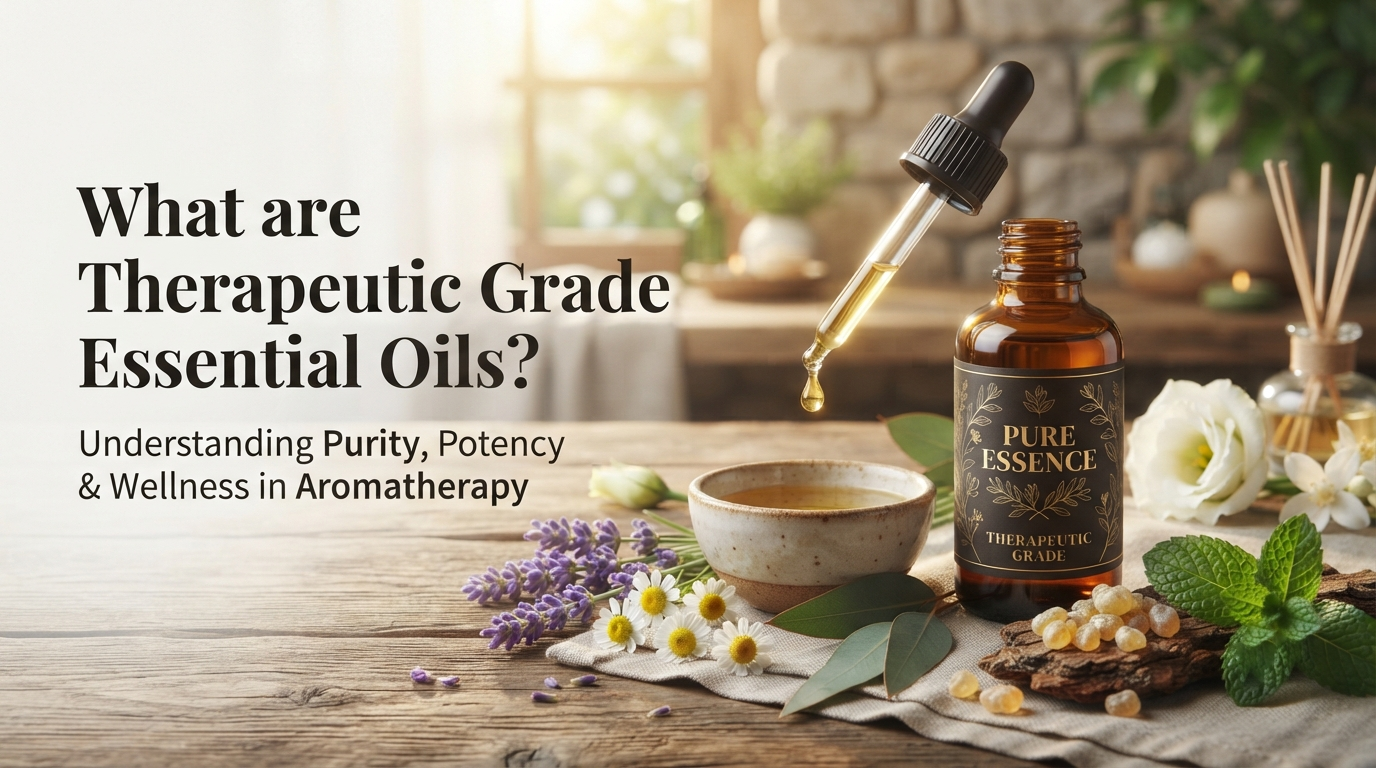
Compared to the other grades of essential oils, therapeutic-grade essential oils are produced using a higher standard production process. This ensures that the end product is pure and of high quality. Therapeutic-grade essential oils are extracted from plants through steam distillation or cold pressing. They do not involve any form of dilution or the addition of synthetic ingredients to produce pure essential oils.
In addition to the production process, therapeutic-grade essential oils are subjected to rigorous laboratory tests, such as GC-MS (gas chromatography-mass spectrometry), to ensure that they meet the quality standards. Therapeutic-grade essential oils are primarily used for therapeutic, massage, and aromatherapy purposes.
Some of the commonly used therapeutic-grade essential oils include lavender, peppermint, and tea tree oils among others. Therapeutic-grade essential oils are higher in concentration, aroma, and cost compared to other grades of essential oils.
How Are Essential Oils Graded?
The grading process of essential oils differs from one company to another. However, there are a few things to consider when determining the quality of essential oils.
- First, essential oils are produced from medicinal plants. Therefore, it is advisable to purchase essential oils from plants that are organic and free from pesticides.
- Secondly, it is important to consider the production process of essential oils. The best essential oils are produced using steam distillation and cold pressing methods. Essential oils that are produced using chemical processes have lower quality.
- Thirdly, essential oils should be subjected to quality tests and certifications before use and sale.
- The best way to determine the quality of essential oil is by considering the GC-MS tests to ensure the oils are highly potent and close to their natural form.
Benefits of Cosmetic Grade Essential Oils
- Comparing cosmetic-grade essential oils to other essential oil grades, cosmetic-grade essential oils are relatively cheap.
- In addition to being cost-effective, cosmetic-grade essential oils are diluted and, therefore, safe for topical application.
- Another benefit of using cosmetic-grade essential oils is that they are designed for mixing with other products. This helps to form a desirable scent in beauty products such as lotions, creams, and shampoos.
- Besides their ability to be mixed with other products to form beauty items, cosmetic-grade essential oils also have a pleasant aroma. This makes them appropriate for use in personal care items such as body mist, candles, and soaps.
- The pleasant aroma is useful in masking undesirable odors and providing products with a unique scent.
Benefits of Therapeutic Grade Essential Oils
- Unlike other essential oils, therapeutic-grade essential oils offer wellness benefits due to their potency.
- Therapeutic-grade essential oils promote quick healing and wellness because of their potency.
- Other than the potency of therapeutic-grade essential oils, they are also extracted using steam distillation, making them pure essential oils. The purity of therapeutic-grade essential oils is essential as they promote dilution to offer consistent therapeutic benefits upon their usage.
- Besides potency and purity, therapeutic-grade essential oils also last longer since the extraction process is free from chemicals. This could hinder the longevity of therapeutic-grade essential oils.
- Therapeutic-grade essential oils offer wellness benefits to people who use them therapeutically.
When to choose Cosmetic Grade Essential Oils?
Cosmetic-grade essential oils are used in manufacturing beauty, body, and personal care products. As a result, cosmetic-grade essential oils are used to manufacture lotions, shampoos, and perfumes, among other related products.
Therefore, if you desire to use essential oils in your skincare and haircare routine or make cosmetics and personal care products, it is advisable to use cosmetic-grade essential oils. Cosmetic-grade essential oils are cost-effective and ideal for beginners.
If you desire to add fragrance to your personal care products, such as lotions, body mist, candles, and soaps, it is advisable to use cosmetic-grade essential oils.
When To Choose Therapeutic Grade Essential Oils?
It is advisable to use therapeutic-grade essential oils for aromatherapy, massage, and other therapeutic uses. On the other hand, if you want to ensure that the essential oils you buy meet the quality standards, it is advisable to buy therapeutic-grade essential oils.
Therapeutic-grade essential oils can also be used for topical application (after dilution). They are used in aromatherapy and holistic healing practices where people desire to maximize the wellness benefits of essential oils.
Common Myths About Essential Oil Grades
There are several myths surrounding essential oil grades.
- A common myth about essential oil grades is that essential oils that are labeled as 100% pure essential oils are therapeutic-grade essential oils.
- Another myth about essential oil grades is that therapeutic-grade essential oils have an established worldwide regulatory organization that certifies therapeutic-grade essential oils. However, this is not the case because therapeutic-grade essential oils usually do not have an established regulatory organization. Therefore, different essential oil producers develop their own grading systems based on their knowledge and objectives in the production of essential oils.
- Another myth about essential oil grades is that higher essential oil grades usually have higher prices. Although higher essential oil grades usually have higher prices, essential oil buyers should be wary of cheaper essential oils. It is because some lower-grade essential oils can also be costly.
- Therefore, it is important to conduct research on essential oil grades before purchasing essential oils.
- Lastly, a myth about essential oil grades is that cosmetic-grade essential oils are lower-grade essential oils compared to other essential oil grades.
How To Identify High-Quality Essential Oils?
Here are the best tips to identify –
- When purchasing essential oils, it is advisable to do so from a credible source and avoid buying essential oils from unverified sources.
- Moreover, buyers should look for certifications such as a certificate of analysis, laboratory testing certification, and other relevant certifications to ensure the quality of essential oils.
- When buying essential oils, it is important to avoid products with vague labeling such as natural or aromatic oils.
- Essential oils should also be stored away from sunlight and in dark glass to indicate that they are high-quality essential oils.
- Other than that, buyers should look for essential oils that provide specific information on the labels, including botanical names and other details about production.
Questions To Ask When Buying Essential Oils
These are some important questions that a buyer must ask before buying essential oils.
- When purchasing essential oils, it is important to ask the purpose of the essential oils because it helps in determining which type of essential oils to purchase. Therefore, ask the purpose of essential oils if you want to buy essential oils for a specific reason.
- When buying essential oils, you should also ask whether the essential oils are diluted or not and what dilution methods are used.
- You should also ask specific questions about the authenticity of essential oils and whether their production process meets the quality standards of essential oils.
- Moreover, ask about the source of the plant used to produce the essential oils.
- When purchasing essential oils, ask questions about laboratory testing and certification of the essential oils.
- Lastly, ask about the cost of the essential oils and ensure that they are not overpriced.
You may also like this:
Conclusion
The difference between the two grades of essential oils is pretty clear now. The last decision depends on the buyer and their requirements and purpose. If the preference is for aromatherapy-based oils, then therapeutic-grade oils are best. However, if the preference lies in using oils for manufacturing cosmetic and beauty products, then cosmetic-grade oils are good to go. For more information, visit Moksha Lifestyle, and you might find the best deals on essential oils.