
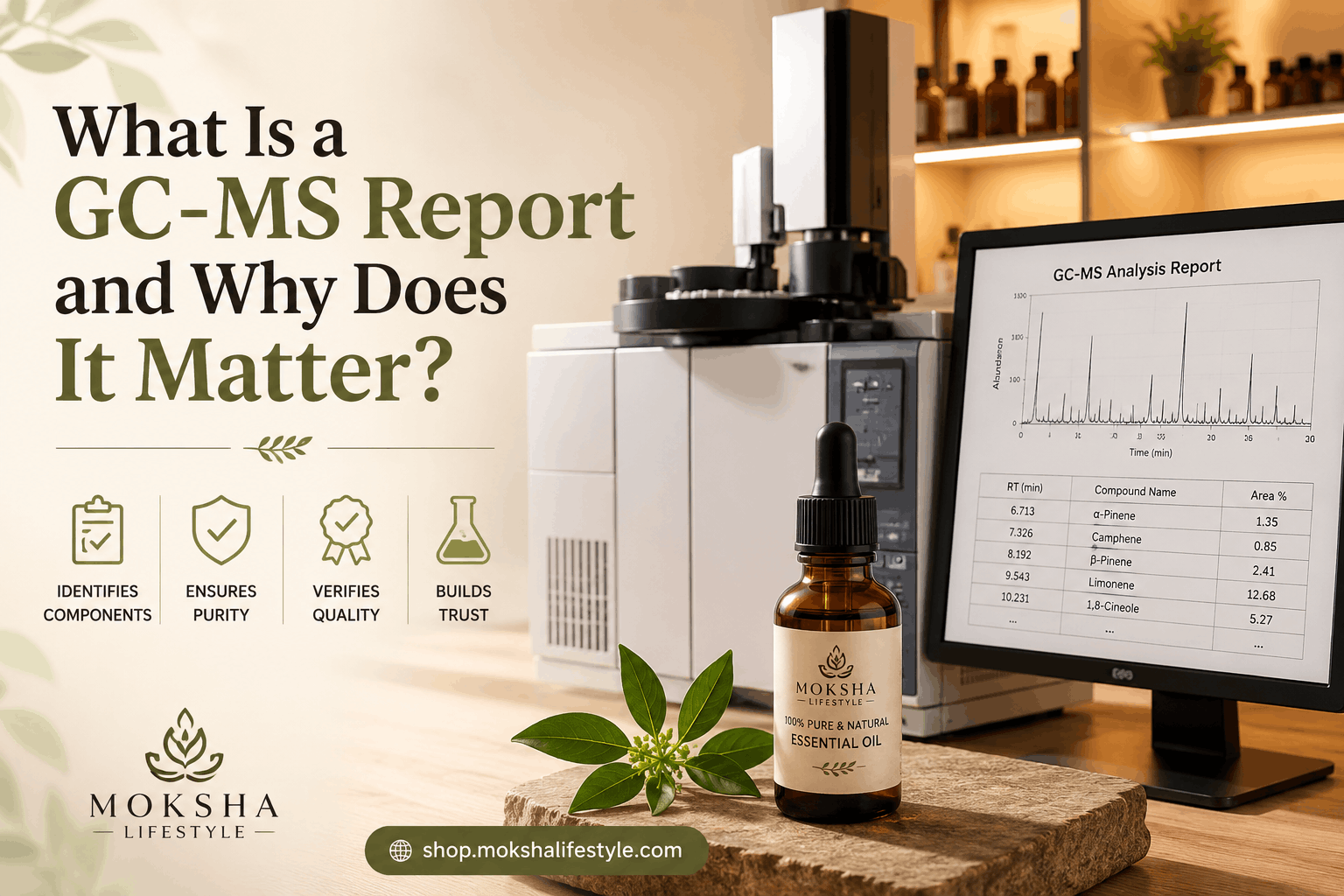
What Does GC-MS Stand For?
Gas Chromatography–Mass Spectrometry (GC-MS) is a powerful analytical method used to detect the presence of chemicals and chemical components in a sample. It is a combination of two scientific methods used for analysis, which are Gas chromatography (GC) and Mass spectrometry (MS).
During gas chromatography, the sample is vaporized and is introduced into the column with the help of an inert gas; the components of the sample are separated as a function of the physical and/or chemical properties. After separation, the compounds are directed to the mass spectrometer, where a beam of them becomes ionized, and then they undergo fragmentation and are detected as a function of mass-to-charge ratio.
This process generates a ‘spectral fingerprint’ that can be used to uncover and accurately measure a compound in any sample.
How Does a GC-MS Report Work?
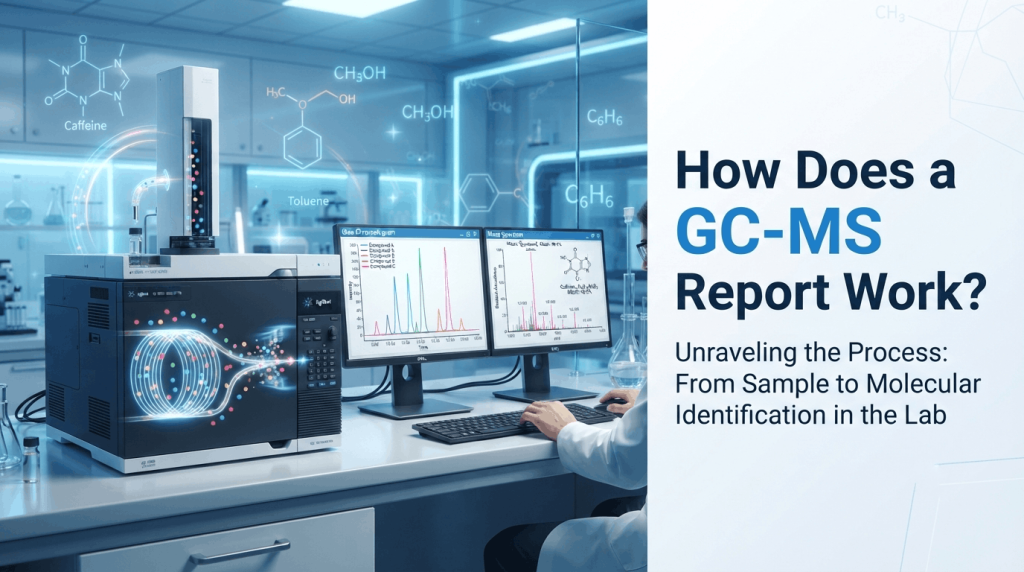
The GC-MS report is prepared by providing the chromatogram and mass spectrum of the sample obtained in the Gas Chromatography–Mass Spectrometry. First, different compounds in a sample are separated in the gas chromatograph to produce a separation of peaks, each of which represents a different compound in the sample.
Peaks will be found at a certain retention time, giving an idea of what compound is present. The separated compounds are then measured using the mass spectrometer, which produces mass spectra of the compounds, indicating the fragments of each one. These spectra have been compared with reference spectral databases to decide on the accurate identification of compounds.
What Information Does a GC-MS Report Contain?
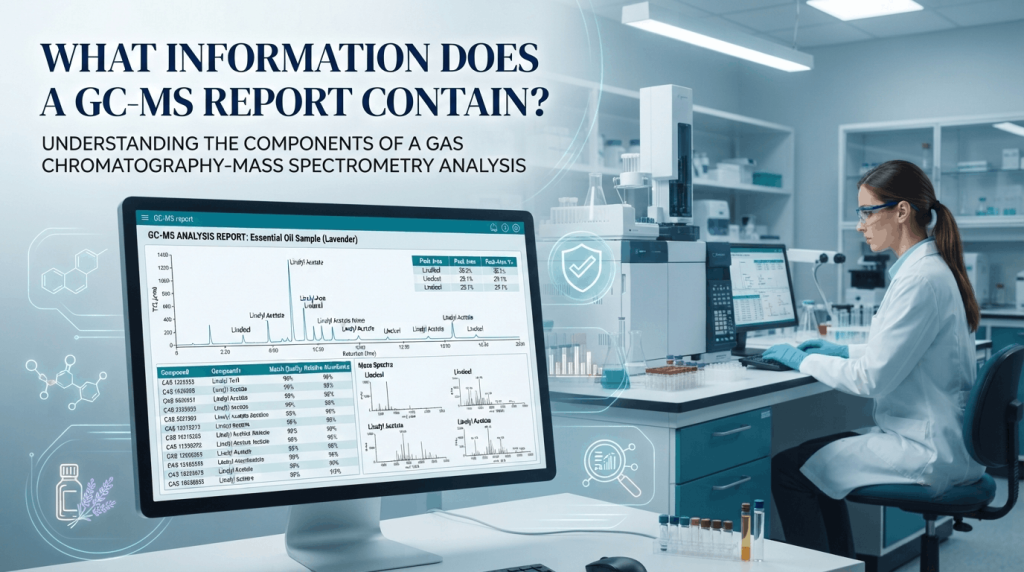
A GC-MS report will provide information on the chemical components in a sample. It usually contains a chromatogram, a plot of the peaks for separation of the various chemical compounds during gas chromatography. The peaks are numbered in the order in which the compounds came off the column, called retention time.
Mass spectra of individual compounds are also included, with patterns for molecular fragments employed for the identification of the compounds. Some other data that might be included are: compound names, molecular formulas, molecular weights, peak areas, peak heights, and relative and/or estimated concentrations.
Many reports will identify the detected compounds by searching a reference library of database compounds and give a match score to signify the confidence level for identifying a compound.
You may also like this:
Why Does GC-MS Testing Matter?
The GC-MS testing is important since it offers very accurate and reliable identification of chemical compounds within a sample. It is an alliance of gas chromatography (GC) for their separation and mass spectrometry (MS) for their detection, which is capable of detecting substances at very low concentrations.
This leads to the use of GC-MS in various fields like medicine, environment, food, forensics, and chemicals. The technique enables both the identification of contaminants and assurance of product quality, regulatory compliance, and high-level identification and confidence of unknown compounds. It is invariably applied in forensic science to analyze drugs and perform toxicological tests, and in environmental labs to check contamination.
Importance of GC-MS Reports for Essential Oils
1. Purity Testing: Verifies the purity and Authenticity of Essential oil. The chemical constituents identified from the GC-MS reports confirm the purity and authenticity of an oil. The analysis can identify adulteration, dilution, and/or synthetic additives that can affect the quality of a food product. The product must be authentic and composed of only naturally occurring compounds for manufacturers, retailers, and consumers looking to ensure high-quality and true-to-specification products.
2. Harvesting: Essential oils can vary from one to another by condition, climate, soil conditions, harvesting methods, and processing techniques. A GC-MS report includes a detailed chemical profile, where a producer can make chemical batch comparisons and be assured that the quality of the batch they produce is consistent. For therapeutic purposes, cooking, and using the essential oil in cosmetics, this consistency is highly desirable as the therapeutic effect and aroma of the oil will rely on stable compositions of active constituents.
3. Supports Safety Assessment: All major and minor compounds present in an essential oil are identified in the case of the Gas Chromatography – Mass Spectroscopy (GC-MS) test, along with any compounds that might be irritating or harmful. Useful for evaluating safety, determining the levels of use, and avoiding ingredients that can cause allergic reactions. Analyzing a product using a GC-MS report aids in the responsible formulation of a product and ensures consumers remain safe from unwelcome side effects.
4. Identifies Contaminants and Adulterants: The results from a GC-MS can show if any contaminants may be present in an essential oil, such as the presence of pesticides, solvents, or unauthorized contaminants. It also aids in detecting such practices of adulteration as mixing expensive oils with low-priced oils. Identifying these problems is essential to maintain the integrity of the product, to conform with regulatory requirements, and to keep the consumer’s confidence in the essential oil products.
5. Improves Therapeutic and Research Applications: The chemical composition of the essential oils relates well to the therapeutic properties. GC-MS reports offer exact knowledge from the evaluation of the concentration of the active compounds and thus allow researchers and practitioners to have a deeper understanding of an oil’s potential benefits. This information can aid in scientific research, product formulation, and effective essential oil utilization within the field of aromatherapy and wellness.
6. Consumer Confidence and Transparency: GC-MS reports are a key component in conveying the company’s commitment to quality assurance and transparency. The chemical profile of an essential oil can be read by a consumer, and appropriate buying decisions can be made on the basis of known information. This transparency will foster brand trust, help distinguish quality products from lower quality, and build confidence among the manufacturer, supplier, and eventual end-user of high-quality essential oil products.
You may also like this:
Conclusion
Moksha is an established Wholesaler, manufacturer, and exporter of essential oils and other Essential oil products in India. Depending on the intended usage, it offers the most genuine essential oils of only the highest quality. They contain no chemicals, additives, or fillers. Furthermore, this does not include synthetic colors, synthetic preservatives, or synthetic fragrances. In other words, that makes them excellent for everyday use. Practically speaking, while the essential oil is 100% natural, it is prudent to use a Carrier oil before applying it to the skin because of the high concentration level. We carry out several tests and quality checks to make sure only the best and the real essential oil is delivered to you. The delivery packaging of the products also meets the exacting quality requirements to ensure optimal results upon use. Not always do consumers go ahead and make payments through our portal; however, when they do so, they are satisfied with the secure payment. Get the best value for money when you purchase essential oils online from Moksha within your specifications. Castor oil can be ordered for use on the face to combat dark circles, lighten skin, boost hair growth, relieve arthritis pains, and improve digestion. Find the castor oil price per Kg and even buy this essential oil in bulk.
FAQs
Q1. How to Interpret the Data on a GC-MS Spectrum?
General Guidelines for reading a GC-MS report are to look at the chromatogram – each peak is a different compound. Record the retention times (when compounds were seen). Look at both mass spectra and compound identification tables containing the names, concentrations, and match scores of the chemicals. When understanding these parameters, the composition, purity, and overall quality of the sample could be determined.
Q2. What can a Gas Chromatography Mass Spectroscopy (GC-MS) Report tell you?
Chemical analysis of a sample can be made available using a GC-MS report, which will show the chemical composition and proportions of individual components in a sample. It can identify the presence of impurities, contamination, synthetic additives, and signs of adulteration. The report also includes information on the level of quality, authenticity, and consistency of the product. In most essential oils and other products, it is a valuable tool to test for composition and safety.
Q3. Whom to order a GC-MS Report for?
The little-known GC-MS report can be beneficial to essential oil manufacturers, distributors, retailers, researchers, aromatherapists, and quality control professionals. Consumers can also request access to these reports if they wish to know the purity and authenticity of the item. They’re implemented in the lab to ensure precise chemical analysis and product evaluation, and in businesses to uphold quality standards as well as regulations.