
Best Essential Oil Manufacturers in India for Wholesale & Bulk Buyers
Essential oils in their purest form are available only in their packaging. It broadly mentions “Pure & Organic”. This happens especially when you’re looking for a good essential oil supplier. If you search the internet for essential oil manufacturers in India, hundreds of names will appear. Some look legit. Some don’t. Who can you trust with your money and your business? A frequent issue for spa owners, skin care brands, and distributors. You don’t want to get diluted oil or a supplier that goes away after you pay. This is why we created this easy guide. We’ll help you navigate some of the most trusted manufacturers in the essential oil business. You will discover what it takes to be a reliable manufacturer, and how to purchase wholesale essential oils without the stress. How to Know If an Essential Oil Manufacturer Is Trustworthy? First, let’s discuss what it means to be “trustworthy.” A good manufacturer should tick these boxes: As you read on, use this checklist to keep in mind. It will help you assess any supplier, even one that is not on this list. Top 10 Trusted Essential Oil Manufacturers in India The top essential oil manufacturers in India are listed below. India is now a significant producer of essential oils. Aromatic plants are grown in the country, and this makes it easier to extract oils locally. These are some of the manufacturers that are recognized in the bulk and wholesale space. 1. Moksha Lifestyle Among bulk buyers, Moksha Lifestyle is well known for providing a variety of essential oils, carrier oils, and natural ingredients. Their commitment to purity and clear wholesale pricing is what makes them a go-to choice for bulk buyers. Wholesalers who want to purchase essential oils in bulk online without the hassle of back-and-forth negotiations. They are also more likely to provide flexible order quantities. This is helpful for smaller businesses that aren’t quite ready for a huge bulk order. 2. Veda Oils Veda Oils is a popular brand that provides a wide range of essential oils, hair care, and skin care ingredients. They are known among customers who are looking for variety in a single place. 3. Aromaaz International Aromaaz International has earned a good reputation in the export market. They specialize in natural and organic oils, and may deal with international wholesale buyers. 4. Pure Oils India Pure Oils India is all about purity claims and lab-tested products, as the name implies. They cater to both small businesses and larger distributors. 5. A.G. Organica A.G. Organica is renowned for its manufacturing prowess and export expertise. They provide oils to customers all over the world, not only in India. 6. Ultra International Ultra International has been in existence for some time and offers a range of aromatic oils. They offer sometimes to retail and wholesale customers. 7. Mystic Moments (India Operations) This company is famous for its variety of pure and blended oils and serves those who prefer single oils as well as blended oils. 8. Anjali Fragrances This manufacturer focuses on fragrance oils along with essential oils, making them a good option for candle and soap makers. 9. R V Essential Oils R V Essential Oils has a strong presence in South India and is a reputed supplier of essential oils extracted from plants of the region. 10. Vanguard Fragrances Vanguard Fragrances offers essential oils and fragrance oils, frequently for the personal care and cosmetics sector. Important: Please do not rely on documents or samples provided by any supplier. Always ask for updated documents and samples before ordering, as certifications and offerings can change over time. How To Source Organic Essential Oils in Bulk? The knowledge of essential oil manufacturers in India is not sufficient. There’s also a process. Here are some of the smart ways to source essential oils in bulk: This process will help you avoid scams and poor deals on fake oils. Best Essential Oils for Skin, Hair & Body As a spa owner or personal care brand, some oils are always in demand. Here are some to keep on hand: The best essential oils for massage are: Popular skin essential oils for bright and glowing skin: Having these oils in bulk may help you keep up with your regular customers without running out of stock. Common Questions Bulk Buyers Ask Before Buying Essential Oils Wholesale Some of the most frequently asked questions by bulk buyers before they select a manufacturer. These questions can be asked in the beginning so you will not be confused later. Conclusion Selecting the best essential oil manufacturer in India does not need to be daunting. It’s important that you pursue purity, good lab testing, fair pricing, and good communication. The above manufacturers are all worthy of consideration depending on the variety, export quality, or scale of manufacture. For those seeking a supplier that prioritizes purity while offering straightforward wholesale pricing, Moksha Lifestyle is the one. Moksha is a good place to begin for bulk buyers and distributors looking for quality essential oils without the hassle of minimum orders. Regardless of the manufacturer, always request samples and lab reports. An ounce of prevention is worth an ounce of cure. FAQs There is no such thing as the best for all. It is based on your requirements, be it purity, price, diversity, or export potential. It’s best to compare a few reputable names. To check the purity of essential oils, ask for lab reports, certifications, and a COA from the manufacturer. You can find pure and organic essential oils at Moksha Lifestyle. Competitive pricing for bulk buyers, a wide variety of oils, and top quality. The best essential oils popular in India are Sandalwood Oil, Vetiver Oil, Rose Oil, Holy Basil Oil, and Eucalyptus Oil.
Buy Wholesale Essential Oils in India: The Ultimate Guide for B2B Buyers
Starting a new brand in the beauty sector? Well, you might need oils that brings natural scent and therapeutic benefits in your products. Essential oils are the one to go. But, as a B2B business owner, finding reliable essential oil supplier in India seems like a hefty process. Well, fret not, we will cover the ultimate checklist to buy wholesale essential oils in India. This guide is your companion to all things regarding how to buy bulk essential oils in India. We have covered all the important steps, advice, and tricks to help you find the best b2b essential oil supplier. We fully understand that you might want to know how to buy essential oils in wholesale easily and wisely. So, this checklist is the ideal one to help you in your exciting search for the best essential oils bulk! Let’s begin! What are Essential Oils? Essential oils are rich plant extracts packed with plant benefits in an essence form. They are used in aromatherapy, beauty sector, spa’s, salon’s, and in pharma companies. Why Are Essential Oils So Popular in 2026? Essential oils can be found almost anywhere in these days and in any products we can imagine. From cosmetics and skincare products to housekeeping cleaners and delicious food. These precious extracts are highly demanded for even centuries of their usage for both beauty and health care. Essential oils are much needed for any business. They are versatile and can be used in multiple sectors. These oils are in high demand in aromatherapy, cosmetics, food and beverage, and other industries. So, now you might be thinking about how to buy essential oils in wholesale and find the best essential oil supplier! Advantages of Buying Essential Oils in Bulk from India India is also called the “Land of Spices” and “Garden of Eden” for a reason! Be it spices, essential oils, or any other natural products, India has everything one could possibly dream of! Pure Indian essential oils are very popular among buyers from all over the globe! So, if you are searching for how to buy essential oils in wholesale wisely, here’s the guide. India is the best choice for you for bulk buying essential oils for B2B buyer! Below are some reasons why you should consider buying essential oils from India: A wide variety of plants and herbs India has all seasons. This country is famous for its biodiversity. The agricultural sector grows wide range of plants, herbs, and flowers. Thus, you can find almost any essential oil you could imagine in India. A long history of expertise People in India have known about the power and potential of essential oils for centuries. Essential oil production and extraction techniques have been perfected over the years. High quality and cost-efficiency Wide biodiversity and rich experience result in high quality and great cost-efficiency. You will find what you need for a fair price without breaking your bank! Variety of b2b essential oil supplier companies India offers a wide range of trusted essential oil suppliers. So, it will not be difficult to find the one that suits you according to your criteria and quality demands. The Ulitmate Checklist: How to Find the Best Essential Oil Supplier in India? Choosing the best essential oil supplier is a challenging task and requires special attention. It also requires thorough checking of a large number of criteria. Thus, to find the best b2b essential oil supplier in India to buy essential oils in wholesale, tick off these points. A few general tips and tricks will help you make the right choice: Most essential oil suppliers that provide their products in bulk have been working for a long time and have great customer feedback. You can also check the time of the company’s presence on the market. Older companies tend to be more trustworthy and professional in their work. Moksha Lifestyle has been in the business for 20+ years. A professional b2b essential oil supplier will also be open to any questions you may ask. This factor cannot be ignored, as it is one of the most important factors when you buy essential oils in wholesale. Purity and quality are the basis of any good essential oil supplier. To ensure that you are going to receive high-quality and pure essential oils when you buy in bulk, pay attention to these points: Check if the essential oil supplier offers wide essential oil range. The supplier must also commit the supply stability of essential oils. When buying essential oil for B2B business, check the prices of essential oils. Low price doesn’t mean good quality always. Also, ask the supplier about the MOQ for an order. What is the lowest quantity for essential oil order? Ask the essential oil supplier about the different packaging options for different quantities. The most used packagings are 100ml, 500ml, 1ltr, 10ltrs and more. Talk to them prior about the safe and secure shipping of products to the preferred location. When selecting essential oil supplier for B2B business, check their responsiveness. What to Look for to Ensure Pure and High-Quality Essential Oils? To ensure that you will receive pure and high-quality essential oils, tick off these points. After checking, you will be 100% satisfied with your purchase when you buy in bulk. So, make sure to pay attention to the following details: Make sure to cross check the botanical name of the essential oil. Before judging the product quality, check the origin of the plant. It’s important for a B2B buyer looking for wholesale essential oils. You can never miss out on this point. Always see the method of extraction. Steam-distilled essential oils are worth your money. Gas chromatography-mass spectrometry (GC/MS) testing is a laboratory chemical analysis of essential oil to identify its constituents. Any trustworthy essential oil supplier should have GC/MS test results for their products. If organic essential oils are important to you, make sure that the supplier you have chosen provides organic certification. Every batch has its own certificate. So, always
Organic Essential Oil Market Report (2026–2035): Growth, Trends & Insights & Industry Size
Have you ever thought that a small bottle of flower or peels oil can be a part of a business worth billions of dollars? It’s true! Oils extracted from plants by squeezing or steaming are being used by people around the world. It helps them to feel relaxed, smell good and stay healthy. These special oils are known as essential oils. But, the oils produced without the use of chemicals, sprays or artificial fertilizers are organic essential oils. The “clean and natural” variety is becoming more popular than the fake, chemical variety. This easy decision is driving the organic essential oil market to grow at a faster pace than ever. This article discusses the organic essential oil market size, growth rate, trends, and challenges. It also covers the future outlook of the organic essential oil market from 2026 to 2035. Let’s dive in! What Is the Organic Essential Oil Market? Essential oils are concentrated liquids extracted from plants, such as flowers, leaves, peels, roots and seeds. These oils are extracted from companies by special processes such as steaming the plant. The two methods are mainly steam distillation and pressing the plant cold pressing. Now, “organic” essential oils are derived from plants that are cultivated without the use of synthetic (man-made) pesticides or chemical fertilizers. Instead, farmers employ natural techniques to maintain soil and plant health, such as composting and rotating crops. Everyone involved in the cultivation of these special plants are a part of organic essential oil market. These include, extraction of the oils, packaging and selling them to people all over the world. This includes: It’s an industry that brings small farms together with big, worldwide companies, and it’s getting bigger by the year. Organic Essential Oil Market Size & Growth (2026–2035) Let’s discuss the numbers — but in a simple way! The global essential oil market (which includes organic oils as a fast-growing part) was worth around USD 13 to 31 billion in 2026. This depends on which research group is measuring it. It is estimated that it will reach USD 30 billion to USD 66 billion by 2033-2035. That’s a HUGE jump. Why? More and more people are opting for natural, chemical-free products for their skin, hair, home and health each and every year. What Is CAGR? (Why Does It Matter? And What Does It Mean?) The CAGR term is frequently used in market reports. It is an acronym for Compound Annual Growth Rate. This is a fancy term for “how much something grows, on average, each year. Imagine it is a plant. CAGR is a useful tool to determine the average growth rate of a plant. This is calculated over a number of years if it grows a little bit each year. The experts estimate that the CAGR of the organic essential oil market will be approximately 9% to 11.8% from 2026 to 2035. This means that the market is not only expanding, it is expanding at a healthy and steady rate, year after year. Organic Segment Growth The organic segment of the larger essential oil market is even more rapidly expanding than the regular (conventional) segment. This is because: Organic essential oils are typically 15-20% more expensive than conventional essential oils. But, the good part is consumers are willing to pay more for the assurance of purity and safety of organic products. What is the reason behind the rapid growth of the Organic Essential Oil Market? (Key Market Drivers) This is the #1 reason. Today’s consumers are more diligent in reading ingredient labels than ever before. They are avoiding products with parabens (a type of preservative chemical) and artificial fragrances. Rather, they are opting for essential oils derived from plants as they believe they are safer and more natural. Aromatherapy involves the use of essential oils to promote relaxation, reduce stress or enhance concentration. Oil diffusers are small devices that disperse a pleasant fragrance into the air. So, many people now use them in their homes. This has led to aromatherapy being a regular part of life, rather than something exclusive to luxury spas. Lavender oil, tea tree oil, and rosemary oil are now widely used in shampoos, soaps, lotions and anti-aging creams. Brands adore these oils because they smell great. The organic skincare essential oils are beneficial for the skin and hair without any chemicals. Have you ever heard that essential oils are used in food companies as well? Drinks, candies and baked goods are naturally flavored with oils. Some of the organic essential oils such as lemon, mint, cinnamon, and vanilla are used rather than artificial flavoring chemicals. Certain oils, such as clove and oregano, even have germ-fighting properties that help food last longer. Essential oils are becoming a popular ingredient in therapeutic (healing) products. For example: A lot of people do not go to a store to buy things these days, they do it online through their phone, or computer. Organic Essential oil companies are increasingly selling products online via their own websites and marketplaces. This is known as Direct-to-Consumer (DTC) selling. This is a process of a brand selling directly to consumers without the use of a middleman. Brands like Moksha Lifestyle sells organic essential oils directly to wholesalers, distributors, suppliers and even consumers. It makes shopping easier for customers, and it’s making the entire industry grow, grow, grow! Major Organic Essential Oil Market Trends (2026 and Beyond) The demand for organic and natural products has been increasing year by year. This is the crux of the whole trend. Customers all over the world, including India, USA and Germany, are asking, “Is this made naturally? When brands can confidently answer “yes,” they’re gaining customer trust and loyalty. Let’s check out all the largest trends in organic essential oil market business. Sustainable sourcing is the procurement of plant materials without causing harm to the planet or depleting natural resources. Agriculture is becoming more water efficient, soil is being conserved and harmful chemicals are being avoided. Meanwhile, businesses are also going green
How To Start an Essential Oil Business in India – Step by Step Guide
Introduction India’s wellness industry is booming and essential oils are at the heart of this revolution. Nowadays, there are more people turning to natural products over chemical based products for skincare, haircare, home fragrance and stress relief. This growing demand has created a genuine opportunity for those who wish to enter into a meaningful and profitable business. That’s why we have build the guide on how to start essential oil business in India. If you are looking to launch an essential oil business in India, this guide will take you through all the steps, starting from research to launch. Why is it best to start essential oil business online in India? Essential Oil Business is a good opportunity in India because of the following reasons: YOU MAY ALSO : Step by Step Guide to Start Essential Oil Business in India Step 1 – The first step is to do some market research and pick your niche. The biggest error that new business owners make is jumping in without researching the situation. Essential oils come in numerous sub-categories. That’s why it is difficult to have a strong brand when you are trying to be everything to everyone. A few specialty choices to consider: Once you have a clear path you will have an easier time managing your branding, marketing and product. Step 2 – Develop a simple business plan No need to go to 50 pages of a document, but clarity in the basics is required. The following are the key points that should be included in a simple essential oil business plan: This plan will also be useful if you are going to go to investors or apply for a business loan in the future. Step 3 – Determine Your Business Model There are three popular methods for getting into the business, each with a different amount of investment. 1. Manufacturing From Scratch Oils are available in two types. Either they are steam distilled or cold pressed by you. It takes machinery, raw materials, quality testing and a lot of capital to do this. This is best used for large scale production. 2. Private Labeling You purchase pure oils from a trusted essential oil manufacturer like Moksha Lifestyle and package and market them using your own brand name. This is the quickest and cheapest to begin with as you do not extract anything. 3. Reselling or Dropshipping You sell products from an already established brand, but without repackaging. This helps in reduced margins and minimal up-front investment. For many newbies, private labelling is the most cost-effective, fast and controllable method of brand creation. That’s why many new business owners seek an established supplier they can rely on for quality. One such manufacturer that Indian entrepreneurs are regularly drawn to is Moksha Lifestyle. They provide pure and tested essential oils in bulk and offers private labeling services, thus eliminating much of the uncertainty for the beginning entrepreneur. Step 4 – Legally Register Your Business Going without proper registration can cause issues in the future, particularly if it’s for the purpose of scaling. The following is a list of the typical items you will need: Scale Register as sole proprietorship, partnership or private limited company depending on scale. GST Registration If your turnover is above the prescribed threshold, it is mandatory to register for GST. Also, it is beneficial even before that for credibility in the eyes of the business. MSME/Udyam registration Access government schemes, loans, and subsidies to small businesses. Trademark registration This will help you to protect your brand name and logo from being copied. FSSAI license Only needed if your oils are being sold for consumption or food application. Cosmetic manufacturing license If you are making (not just packaging) products for topical usage on the skin or hair you will need this license. The compliance burden is significantly less if you are just private labelling and reselling pre-manufactured oils. Step 5 – Source High Quality Essential Oils This is the step that determines the fate of your brand. Bad quality oils result in poor ratings, low return business, and a poor reputation that is difficult to recover. When choosing an essential oil supplier in India, check for: Moksha Lifestyle is an essential oil supplier in India that has a specialization in bulk purchase. The company helps the new brand owners and make it easier for them to start a new business. This allows the owners to get his or her product off the ground without having to run an entire extraction facility. Step 6 – Focus on packaging and branding Essential oils are primarily a visual sale, particularly online. Your packaging should scream purity, safety and professionalism the moment it is seen. Things to do right in packaging: Dark amber or cobalt glass bottles will help to prevent degradation of oils when exposed to sunlight. Name of the ingredient (botanical name), extraction method, directions for use, and precautions. This helps to avoid overuse or spillage. This information is very important as it helps to establish trust and may be mandated by law. Makes it easier to recognise your brand across your range of products. Packaging doesn’t have to be costly, but it should be purposeful and cohesive. Step 7 – Set Up Your Sales Channels When your products have been created, you need to determine where you will be selling them. Most of the successful essential oil brands in India are using the following channels: Starting with two or three channels and doing them well usually works better than spreading thin across everything at once. Step 8 – Price Your Products Correctly. Pricing essential oils without any maths is one of those things that new business owners do wrongly. Consider these factors: Step 9 – Market Your Brand A marketing strategy for an essential oil company should be educational rather than promotional. They should not sell their product directly from customers’ perspective. Follow these tips – Step 10 – Compliance and Safety Labeling. Essential oils are strong, and
Essential Oil Packaging Guide For Startups
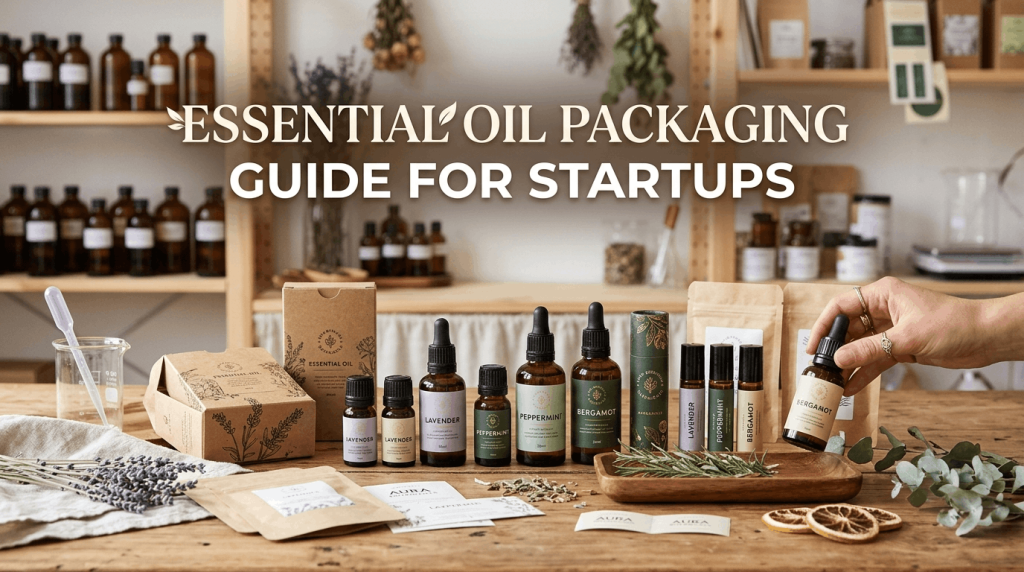
Essential oil startups can benefit the most from packaging, as it could affect the quality of the product being produced, as well as getting the product’s perception and trust from the customer. However, it is recommended to use the proper packaging to maintain the purity, aroma, and therapeutic qualities of essential oils due to their light, heat, and air sensitivity. Quality amber or cobalt glass bottles are useful in preventing oils from degrading and thus contributing to the shelf life of oils. Aside from protection, alluring and well-designed startup packaging can leave a superb impression on the clients and enhance purchase determination, aiding the store to capture the interest of clients in a competitive market. Packaging also functions as a communication medium, as it carries with it important instructions, information about the product, for example, its ingredients, its usage instructions, safety, or certifications. Green and sustainable packaging is another aspect that could further help to build a brand’s reputation among eco-friendly customers. Key Elements of Essential Oil Packaging 1. Packaging Material: The first element crucial in the packaging of an essential oil is the packaging material. Oils are well preserved from harmful UV light and chemical reactions by glass bottles, and amber and cobalt blue glass bottles. Glass helps preserve the oil’s purity like plastic, whereas plastic loses the purity of the oil and its therapeutic properties. 2. Closure System: A secure closure system will stop the loss of oil from leaking, contamination, and evaporation of volatile oil compounds. It is kept and transported in Caps, Droppers, and tamper-evident seals for safety. Convenience to the customer and preservation of the effectiveness of the oil are enhanced by a well-designed closure. Responsible solutions for sealing increase the customer’s trust in the product and also decrease the chance of losing it due to the leaking of the packaging. 3. Label Must Be Clear and Informative: The label needs to contain all necessary information about the product, such as ingredients, instructions, safety, and batch details. Proper labeling is important because it allows customers to select their products appropriately and properly use them. PR attractive label designs also help to develop professionalism and brand identity. Accurate information increases transparency, trust, and compliance with industry requirements. 4. Logo and Design Product: The design of packaging represents the character of a brand and the values of the company. Various colours, typography, logos, and graphics foster a memorable and meaningful picture that makes consumers look for it. Branding all packaging materials makes it easier to recognise the brand and encourages customers to be loyal to the products. Standing out in a crowded marketplace and letting essential oil startups tell their stories, a distinctive design helps them achieve these goals. 5. Eco-Friendly Packaging: Modern Customers are choosing eco-friendly packaging solutions more than ever. Recyclable glass is used, biodegradable materials are employed, and packaging waste is kept to a minimum to provide an indication of sustainability. Consumers with an eco-conscious mindset may appreciate eco-friendly packaging, and it can boost sales. Sustainable practices also help keep the environment small and promote a long-term willingness to continue developing and performing responsibly. 6. Dropper: Various features enable customers to apply the right amount of product, including droppers, roller balls, spray pumps, and reducers. An effective dispensing system enhances the usability of the application, prevents over-use, and minimises spillages. Convenience and Precision help to enhance customer satisfaction and product effectiveness. 7. Compliance and Safety Information: One of the most important issues involving packaging essential oils is regulatory compliance. Clearly featured information should include safety warnings, storage instructions, manufacturing information, and certification information. Compliance helps ensure the law is followed and acts to safeguard the consumer from misuse. You may also like this: Choosing the Right Bottle Materials and Sizes The material and size of the bottle are some of the most important things for essential oil brands to consider when selecting their product bottles, as they can make a difference in the quality of the essential oil products, customer satisfaction, and their brand’s image. The method preferred for essential oil packaging is using glass because it has less reaction with the oil and helps to maintain the purity of the oil. Amber and cobalt blue glass bottles are especially popular as they help to prevent the oils from losing any therapeutic properties they may have over time due to the ultraviolet ray-blocking properties. Although plastic bottles may be easier to use and lower in weight, they are not as well-suited for long-term storage of their concentrated essential oils. It’s also crucial to choose the correct bottle. Smaller bottles (5 ml and 10 ml) are suitable for use in premium oils, for samples and personal use, while larger bottles (30 ml/100 ml) are appropriate for frequent users and commercial use. Essential Oil Labeling Requirements There are many different types of essential oil labelling requirements, and complying with these essential oil labelling requirements will be important for the safety of the consumers and the compliance with regulations & essential oil product transparency. A good label will contain the following basic information: Product name, List of ingredients, the level of ingredients derived from plants, and information about the net quantity. It should also contain instructions for use, storage, and a critical note on precautions or warnings, e.g., to keep out of the reach of children and avoid eye contact. Manufacturers should add their name, address, batch number, and date of manufacture/expiration to follow the chain of production and ensure a product’s quality. Sustainable Packaging Options for Startups The opportunity for sustainable packaging is another major avenue for small companies to provide not only an opportunity to reduce environmental impact, but to satisfy the rising demand for consumers’ eco-conscious preferences. Sustainable packaging goes beyond reducing the environmental impact of packaging; it is also about consumers’ preferences to consider the environmental impact of packaging. Reduced resource use and waste for material which cannot be fully recycled by using recyclable organic materials, such as glass bottles, biodegradable packaging,
Marine Notes in Fragrances: Everything You Need to Know

Introduction Have you ever smelled a perfume that made you think of a vacation to the beach, a sea breeze, or a walk along the shore? That’s the enchanting power of marine notes in perfumes. Over the past few years, marine notes have been one of the most popular scent categories, especially for individuals who are looking for something new, fresh, and modern. Whether you are new to the perfume world or are a connoisseur wanting to educate yourself, understanding marine notes will aid you in your next perfume purchase. This blog will cover all the aspects of marine notes, from what they are, how they are created, why they are so popular, and how you can choose the right one for you. What are Marine Notes in Fragrances? Marine notes, or sea notes, are perfume notes that evoke the scent of the ocean, sea breeze, and salty air. They provide perfumes with a fresh, airy, and clean feel, light on the skin. Marine notes are primarily created in the laboratory since it is not possible to extract the “smell of the sea” from the sea or marine life itself. The notes began to be used in perfumes in the early 1990s when synthetic aroma chemicals were developed to replicate the fragrance of the ocean. Marine notes have since been a common feature in many contemporary fragrances, particularly those that are designed to impart a youthful and fresh look. You may also like this: What do marine notes smell like? If you haven’t experienced a marine scent before, think of standing near the ocean on a windy day. In the marine notes, the attempt is made to capture that salty, slightly sweet, crisp, fresh air scent. They often smell: Perfumes don’t usually consist entirely of marine notes. They are usually blended with other fragrances like citrus, woods, or musk to add a more balanced and lasting scent. How are Marine Notes created in Perfumery? The ocean’s smell cannot be bottled, so perfumers create synthetic molecules that replicate the smell of the ocean. Calone is one of the most popular molecules, discovered in the 1960s and popularized in the 1990s in perfumery. Calone is a signature watery, slightly melon-like, ozonic fragrance, similar to marine fragrances. Other synthetic molecules like Helional and other aldehydes are also used to make marine accords. They are often combined with natural ingredients like citrus, sea salt accords,s or light florals to create a more realistic and balanced marine note. All marine fragrances have that quintessential “sea breeze” quality, but it’s the mixing that adds that special flavor to each one. Why are Marine Notes popular in modern fragrances? In fact, marine notes have a special place in modern perfumery, and there are a few good reasons for that: Best Marine Notes Used in Perfumes The notes used in perfumes are the best. The marine notes are primarily synthetic, and perfumers rely on some familiar accords and ingredients to create them. The most frequently used elements are: Element Description Calone The most iconic marine molecule that brings a fresh watery taste to the melon. Sea salt accord Provides a delicate salty note reminiscent of ocean air. Ozonic notes Make that “fresh air after rain” effect Algae or seaweed accords These can be used to give depth and a slight marine undertone. Ambergris or synthetic Historically associated with the sea, and most of the ambergris used in perfumery is synthetic today. These elements are rarely used alone. They are usually mixed with citrus fruits, light woods, or musk to make a full and wearable scent. Marine Notes vs. Oceanic vs. Aquatic Notes The difference between Marine Notes, Oceanic Notes, and Aquatic Notes. The words marine, oceanic, and aquatic are often used interchangeably, but there are differences between them. Term Description/Definition Marine Notes The smell of the sea is usually the theme: salty air, sea breeze, and the familiar “ozonic freshness”. Aquatic Notes A wider category that encompasses all water-related notes, such as rain, rivers, and sea. It’s often considered the umbrella term. Oceanic Notes Specifically attempt to capture the vastness and depth of the ocean, and are often a little more mineral or salty than general aquatic notes. However, in the real world, these terms can overlap, and many fragrance companies use them synonymously to refer to a similar scent profile that’s fresh and watery. Which Fragrance Families Pair Well with Marine Notes? Marine notes are very versatile and will pair well with several fragrance families: A classic combination in which citrus notes, such as lemon, bergamot, and grapefruit, are mingled with fresh and light marine elements. Woodsy, cedarwood, or sandalwood, when combined with light marine elements, add warmth to the perfume, counteracting their airiness. When fresh and herbal notes such as lavender or rosemary are combined with marine elements, they create a scent that is reminiscent of nature and is common in men’s perfumes. Marine fragrances, when mixed with musky elements, acquire a skin-like warmth and become more intimate and long-lasting. Light floral notes such as jasmine or lily of the valley can be combined with marine to create a fresh and slightly romantic floral, which is commonly used in women’s perfumery. Who Should Wear Marine Fragrances? Marine fragrances are rather versatile and will go well with a variety of people, but are particularly appropriate for: Marine fragrances may be a perfect choice if you’re a beach lover, outdoor enthusiast,t or just someone looking for a light, airy perfume. How to Choose the Best Marine Fragrance? There are numerous marine fragrances to choose from, and selecting the appropriate one can be overwhelming. Here are some tips to help you make an informed decision: Common Misconceptions About Marine Notes There are several misconceptions about marine notes that need to be dispelled: Truth: It’s not possible to get fragrance from sea water in practice. Synthetic molecules such as Calone, which mimic the scent of the sea, are used to make marine notes. Truth: They are most popular during
How to Make a Linen Spray with Essential Oils?
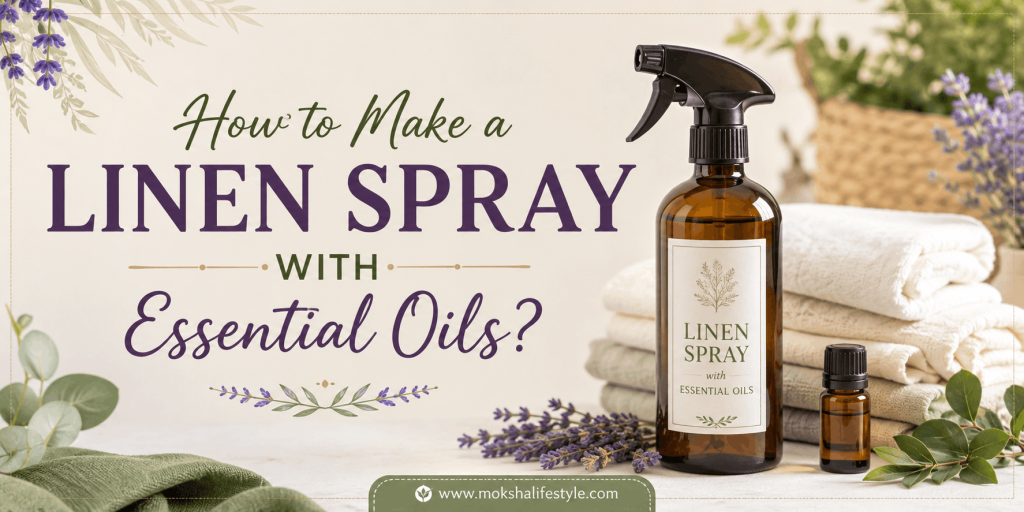
What Is a Linen Spray? Linen spray is a lightly scented liquid used to freshen up linens, including bed sheets, pillowcases, blankets, towels, curtains, and upholstery. It tends to be composed of just water, a type of scent, or essential oils, along with a small quantity of alcohol or preservative that helps spread the fragrance and keep the spray strong and fresh. In the interest of maintaining cleanliness and comfort in the home, linen sprays are used to eliminate stale smells in the linen, freshen the scent of the linen, and condition the fabrics. Many people like to spray their bedding or mattress prior to retiring to bed, particularly if they are applying a calming scent such as lavender or chamomile, as this can induce a feeling of relaxation. Benefits of Using Essential Oil Linen Spray 1. Naturally Freshens Fabrics: The essential oil linen spray is a great way of keeping linen and other fabrics fragrance-free and odourless without the need for heavy, cumbersome synthetic perfumes. A light mist will freshen up bed sheets, pillow covers, curtains, towels, and wood furniture to help minimize any tarnishing and stale smell between washings. 2. Encourages Relaxation and Improved Sleep: Before getting into bed, dust the bedding to infuse a calming scent that numerous individuals connect with relaxation and comfort. Not a medicine for sleep disorders as such, the soothing fragrance will help to make your nighttime more peaceful and more soothing towards the end of the day and towards sleep. 3. Improves Home Environment: A naturally perfumed linen spray will do the job. Its scent is pure, refreshing, and inviting, making any room more comfortable whether it’s for curtains, beds, cushions, or guest pillows and bedding. By adjusting the addition of various essential oil blends to one another, one can create different moods, like a fresh, citrus scent for daytime use, or a warm floral scent for a cosy evening at home, adding even more to the home experience. 4. Versatile Solution for Linen Care: Essential oil linen spray is a versatile product that can be used on a variety of washable fabrics. You can use it to freshen up your clothes, bedding, and towels, as well as cloth-covered furniture. 5. Natural Option: One advantage of using essential oil linen sprays is that they are available in many options and are more natural choices than typical fabric fresheners that are aromatic with stable synthetic perfumes. The sprays are made with a select blend of essential oils that provide a subtle and gentle fragrance, and offer a way for the user to customize the scent to their liking. You may also like this: Ingredients You’ll Need 1. Distilled Water: The base of an essential oil linen spray is distilled water, which will help to dilute the other ingredients in the spray and will not deposit minerals that may form with tap water. It is also pure, which goes towards making the spray a long-duration spray, ideal for creating a clean, refreshing fabric mist. 2. Essential Oils: These essential oils give linen sprays a nice fragrance and aroma. Lavender, lemon, eucalyptus, peppermint, and sweet orange are popular options to choose from. One can use a single oil or mix more than one to create a special aroma of individual oils according to their taste/liking. 3. Witch Hazel: Witch hazel is a natural emulsifier that aids blending of essential oils with water. It also enables good dispersion of the spray on the fabrics without leaving an oily residue. 4. Rubbing Alcohol: A small quantity of rubbing alcohol will help the essential oils spread all over the spray; it will also allow the fabrics to dry faster. It also works to help preserve the mixture for longer by stopping microorganisms from growing – leaving the linen spray stable and easy to use over and over again in the house. 5. Vegetable Glycerin: Vegetable Glycerin adds a bit of moisture to the spray, as well as prolonging the time that the scent can be noted on fabrics. It can be used as an optional ingredient; a small quantity would be required to ensure there was no residue in the linen spray which could otherwise affect the performance of the spray. 6. Spray Bottle: It’s a super important item to have handy for storing and using your linen spray — one that is clean and will last long enough to be reused. Often it is preferred to use glass bottles, particularly amber or cobalt blue, as they can help in protecting the essential oils from the effects of light. How to Make a Linen Spray with Essential Oils? Creating an essential oils linen spray is easy, simple, and involves minimum supplies. Fill a clean spray bottle with distilled water, leaving a little air in the bottle. Dilute the essential oils with witch hazel and/or a small amount of vodka to ensure equal distribution of the essential oils in the water. Then, compound and/or oil 15–30 drops of your essential oils of choice, lavender, lemon, eucalyptus, sweet orange, or whatever you like and select. Add the necessary amount of vegetable glycerin if a longer-lasting odor is desired in fabrics. Close the spray bottle tightly and shake to mix all ingredients. DIY Linen Spray Recipes for Different Needs 1. Lavender Bedtime Spray: Fill a spray bottle with 1 cup still water, 2 tablespoons of witch hazel, and 20 drops of the Lavender essential oil. Before using, lightly fill pillows or bed linens to create a bed atmosphere; shake them vigorously. Light fillings: shake on bed, pillows, and bed linens to make a relaxing bed. 2. Fresh Citrus Linen Spray: Mix 1 cup of distilled water and 2 tbsps of vodka, 10 drops of lemon essential oil, and 10 drops of sweet orange essential oil. Shake over curtains, cushions, or towels to freshen, lift, and perfume fabrics with a citrus lily before using. 3. Cleaned-up Eucalyptus Mint Spray: In a spray bottle, add witch hazel, eucalyptus essential oil (12 drops),
Essential Oil Procurement Guide for Cosmetic Brands
What Is Essential Oil Procurement? The entire sourcing, procurement, and management of the sources of natural essential oils, such as leaves, flowers, fruit, roots, bark, etc., is called essential oil procurement. It includes supplier sourcing (both reliable and not so reliable), oil quality and purity checks, oil price and oil negotiation, and abiding by industry standards and regulations. When it comes to choosing the end result, there are several factors to take into consideration, such as the way it is cultivated, the method used for harvest, the eco-friendliness, and its certification. The achievement of superior quality essential oils is indispensable when producing and crediting cosmetics, aromatherapy products, pharmaceuticals, food products, and personal care products. Ideally, procurement personnel will carry out supplier audits and lab testing or quality control to guarantee authenticity and to prevent any possibility of contamination. Why Is Strategic Sourcing Important for Cosmetic Brands? Some of the other primary reasons cosmetic brands use strategic sourcing are that it helps them to guarantee a constant flow of top-notch ingredients, packaging, and manufacturing resources, reduces risk, and optimizes costs. By sourcing appropriately and managing relationships with suppliers, cosmetic companies will be able to guarantee that the product quality meets the regulations and adjust to the changes in the market. Strategic sourcing also assists brands in building solid relationships with their trusted vendors, which have the potential to provide them with better prices, innovation, and transparency within their supply chain. In a market where sustainability and ethical considerations are gaining weight, brands are able to get access to and source ingredients responsibly and environmentally friendly packaging materials. You may also like this: Key Factors to Consider When Procuring Essential Oils How to Evaluate and Select Essential Oil Suppliers? Before choosing and evaluating an essential oil supplier, it is important to consider the quality of the essential oil supplies, sourcing practices, certifications, and reliability of the supplier. The first and most important step is to check if the supplier offers oils that are free from additives and chemical dyes and boast laboratory testing reports like the GC-MS, which confirms with laboratory analysis that they have a pure essential oil with no additives. Review the sources from which the raw material is being sourced to make sure it is a sustainable and ethical practice. The presence of certifications (e.g., organic, ISO, GMP) may signal that the product follows well-acknowledged quality standards. Additionally, transparency on extraction practices, ingredient details, and traceability of the ingredients from the supplier should be considered. Customer feedback, reputation in the industry, and industry experience can give a ton of information about the supplier’s credibility and consistency. When ordering large quantities, first-class samples should be ordered so that there is an opportunity to test drive for their aroma, quality, and performance. You may also like this: CONCLUSION Moksha is an established Wholesaler, manufacturer, and exporter of essential oils and other Essential oil products in India. Depending on the intended usage, it offers the most genuine essential oils of only the highest quality. They contain no chemicals, additives, or fillers. Furthermore, this does not include synthetic colors, synthetic preservatives, or synthetic fragrances. In other words, that makes them excellent for everyday use. Practically speaking, while the essential oil is 100% natural, it is prudent to use a carrier oil before applying it to the skin because of the high concentration level. We carry out several tests and quality checks to make sure only the best and the real essential oil is delivered to you. The delivery packaging of the products also meets the exacting quality requirements to ensure optimal results upon use. Not always do consumers go ahead and make payments through our portal; however, when they do so, they are satisfied with the secure payment. Get the best value for money when you purchase essential oils online from Moksha within your specifications. Castor oil can be ordered for use on the face to combat dark circles, lighten skin, boost hair growth, relieve arthritis pains, and improve digestion. Find the castor oil price per Kg and even buy this essential oil in bulk. FAQs Q1. What are the essential oil requirements of quality and testing? The quality of the essential oils on the market comes in the form of essential oil standards. Testing reports, e.g., GC-MS analysis, should be provided for chemical composition and to check for possible adulteration by suppliers. Various tests are added to ensure the safety of heavily processed items, such as microbial contamination, pesticide residue, and heavy metals. Conformance to international standards allows for performance and reliable cosmetic application. Q2. However, what are the vital Certifications Cosmetic Brands ought to search for? Usable suppliers should have a known certification that will prove to cosmetic manufacturers that quality and compliance with regulatory standards are maintained. Some of the important certifications are Cosmos for natural cosmetics & organic cosmetics; GMP certification for manufacturing practices; and ISO 9001 certification for quality management. These certificates help in the assurance of product integrity, sustainable sourcing, and quality in line with industry standards. Q3. What are two Cost Optimization Strategies? What is Bulk Purchasing? Optimizing costs when ordering bulk essential oils requires judgment for the appropriate balance between cost, quality, and reliability. Brands will be able to make long-term agreements, buy in bulk to get reduced prices, and group their orders to cut the shipping costs. The creation of an effective relationship with suppliers, accurate demand forecasts, and direct supply from producers can amplify cost efficiency measures and preserve product quality as well.
What Is a GC-MS Report and Why Does It Matter?
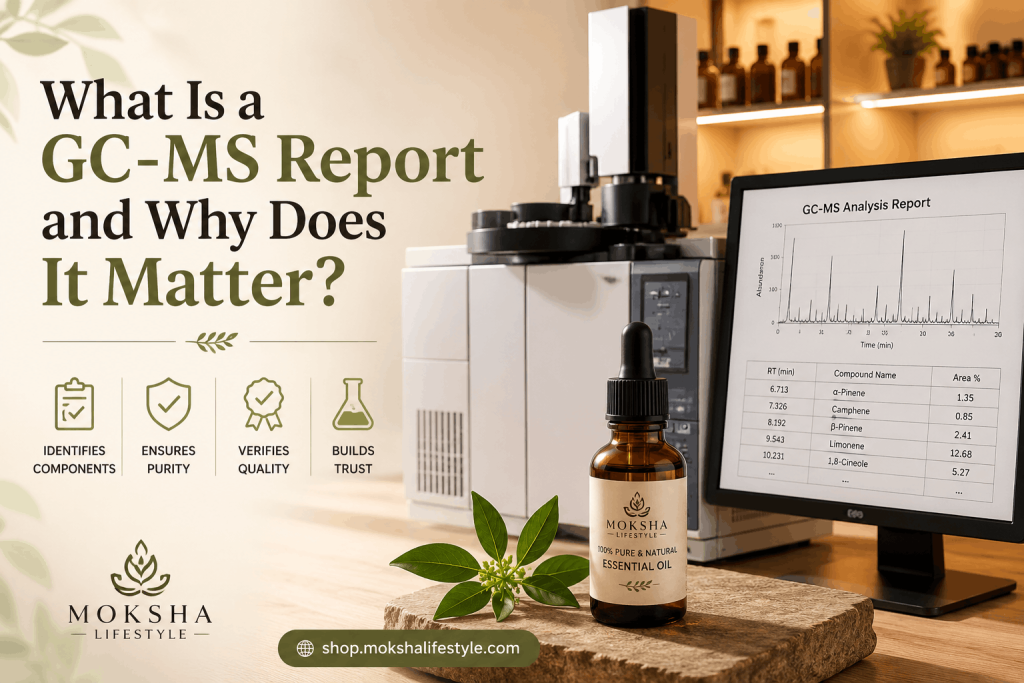
What Does GC-MS Stand For? Gas Chromatography–Mass Spectrometry (GC-MS) is a powerful analytical method used to detect the presence of chemicals and chemical components in a sample. It is a combination of two scientific methods used for analysis, which are Gas chromatography (GC) and Mass spectrometry (MS). During gas chromatography, the sample is vaporized and is introduced into the column with the help of an inert gas; the components of the sample are separated as a function of the physical and/or chemical properties. After separation, the compounds are directed to the mass spectrometer, where a beam of them becomes ionized, and then they undergo fragmentation and are detected as a function of mass-to-charge ratio. This process generates a ‘spectral fingerprint’ that can be used to uncover and accurately measure a compound in any sample. How Does a GC-MS Report Work? The GC-MS report is prepared by providing the chromatogram and mass spectrum of the sample obtained in the Gas Chromatography–Mass Spectrometry. First, different compounds in a sample are separated in the gas chromatograph to produce a separation of peaks, each of which represents a different compound in the sample. Peaks will be found at a certain retention time, giving an idea of what compound is present. The separated compounds are then measured using the mass spectrometer, which produces mass spectra of the compounds, indicating the fragments of each one. These spectra have been compared with reference spectral databases to decide on the accurate identification of compounds. What Information Does a GC-MS Report Contain? A GC-MS report will provide information on the chemical components in a sample. It usually contains a chromatogram, a plot of the peaks for separation of the various chemical compounds during gas chromatography. The peaks are numbered in the order in which the compounds came off the column, called retention time. Mass spectra of individual compounds are also included, with patterns for molecular fragments employed for the identification of the compounds. Some other data that might be included are: compound names, molecular formulas, molecular weights, peak areas, peak heights, and relative and/or estimated concentrations. Many reports will identify the detected compounds by searching a reference library of database compounds and give a match score to signify the confidence level for identifying a compound. You may also like this: Why Does GC-MS Testing Matter? The GC-MS testing is important since it offers very accurate and reliable identification of chemical compounds within a sample. It is an alliance of gas chromatography (GC) for their separation and mass spectrometry (MS) for their detection, which is capable of detecting substances at very low concentrations. This leads to the use of GC-MS in various fields like medicine, environment, food, forensics, and chemicals. The technique enables both the identification of contaminants and assurance of product quality, regulatory compliance, and high-level identification and confidence of unknown compounds. It is invariably applied in forensic science to analyze drugs and perform toxicological tests, and in environmental labs to check contamination. Importance of GC-MS Reports for Essential Oils 1. Purity Testing: Verifies the purity and Authenticity of Essential oil. The chemical constituents identified from the GC-MS reports confirm the purity and authenticity of an oil. The analysis can identify adulteration, dilution, and/or synthetic additives that can affect the quality of a food product. The product must be authentic and composed of only naturally occurring compounds for manufacturers, retailers, and consumers looking to ensure high-quality and true-to-specification products. 2. Harvesting: Essential oils can vary from one to another by condition, climate, soil conditions, harvesting methods, and processing techniques. A GC-MS report includes a detailed chemical profile, where a producer can make chemical batch comparisons and be assured that the quality of the batch they produce is consistent. For therapeutic purposes, cooking, and using the essential oil in cosmetics, this consistency is highly desirable as the therapeutic effect and aroma of the oil will rely on stable compositions of active constituents. 3. Supports Safety Assessment: All major and minor compounds present in an essential oil are identified in the case of the Gas Chromatography – Mass Spectroscopy (GC-MS) test, along with any compounds that might be irritating or harmful. Useful for evaluating safety, determining the levels of use, and avoiding ingredients that can cause allergic reactions. Analyzing a product using a GC-MS report aids in the responsible formulation of a product and ensures consumers remain safe from unwelcome side effects. 4. Identifies Contaminants and Adulterants: The results from a GC-MS can show if any contaminants may be present in an essential oil, such as the presence of pesticides, solvents, or unauthorized contaminants. It also aids in detecting such practices of adulteration as mixing expensive oils with low-priced oils. Identifying these problems is essential to maintain the integrity of the product, to conform with regulatory requirements, and to keep the consumer’s confidence in the essential oil products. 5. Improves Therapeutic and Research Applications: The chemical composition of the essential oils relates well to the therapeutic properties. GC-MS reports offer exact knowledge from the evaluation of the concentration of the active compounds and thus allow researchers and practitioners to have a deeper understanding of an oil’s potential benefits. This information can aid in scientific research, product formulation, and effective essential oil utilization within the field of aromatherapy and wellness. 6. Consumer Confidence and Transparency: GC-MS reports are a key component in conveying the company’s commitment to quality assurance and transparency. The chemical profile of an essential oil can be read by a consumer, and appropriate buying decisions can be made on the basis of known information. This transparency will foster brand trust, help distinguish quality products from lower quality, and build confidence among the manufacturer, supplier, and eventual end-user of high-quality essential oil products. You may also like this: Conclusion Moksha is an established Wholesaler, manufacturer, and exporter of essential oils and other Essential oil products in India. Depending on the intended usage, it offers the most genuine essential oils of only the highest quality. They contain no chemicals, additives,
Top 11 Essential Oils for Facial Gua Sha Massage
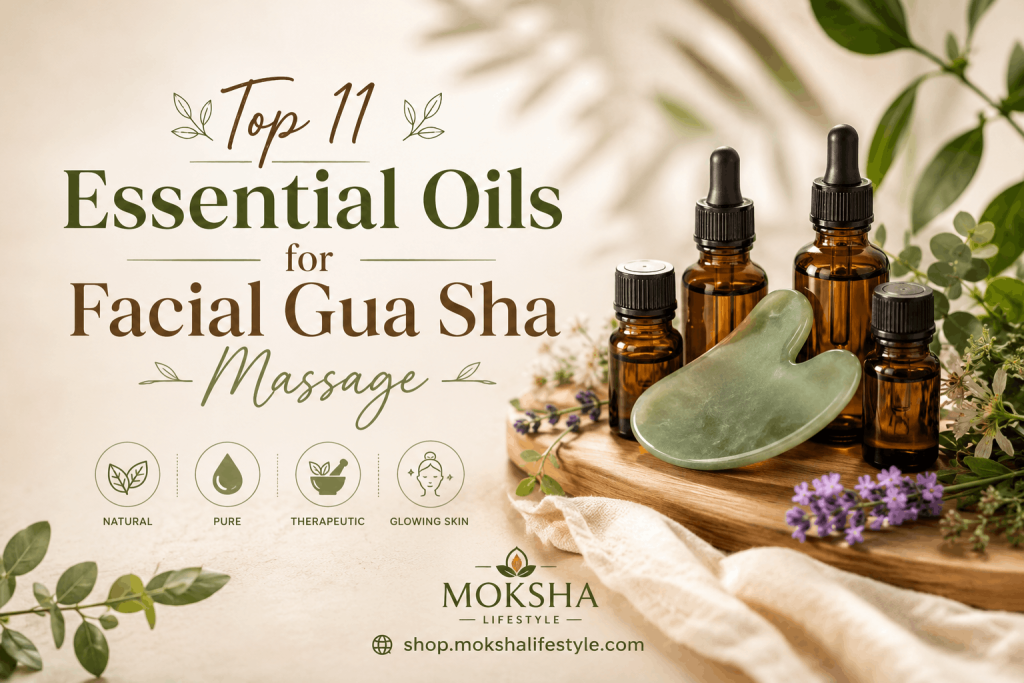
Introduction The right oil matters greatly when doing gua sha, since it shapes both the movement of the tool and the skin’s sensation afterward. Smoothness during use depends on this choice just as much as lasting comfort does. What stays on the face hours later traces back to what was applied at the start. Glide quality shifts noticeably based on the product selected. Long-term effects tie closely to the formula used initially. Each element of experience links directly to that first decision. For those using gua sha often, especially on delicate skin, differences between facial oils become clear. One might find that effective options allow movement easily while avoiding pore blockage. These products tend to strengthen protection layers rather than provoke reactions. Movement across the surface occurs fluidly, reducing friction naturally. This guide outlines top oils suited to gua sha, matched to each skin condition – dryness, aging signs, breakouts, or cost considerations. Revenue may come from links shared here, helping sustain ongoing efforts. What Is Gua Sha? Scraping the skin with a tool defines Gua Sha, a method seen across many Asian traditions. Through this motion, pressure reaches into stiff muscle areas, loosening the web-like layers beneath. Instead of working alone, it sometimes follows deep tissue work for added effect. Tension fades as the body responds by increasing circulation through vessels and drainage pathways. Relief emerges slowly when tissues soften under steady movement. When the instrument moves across the surface of the skin, pressure is applied by the practitioner to produce petechiae. Such minute, rash-resembling spots result from minor bleeding under the skin, which may support innate recovery mechanisms. Benefits of Using Essential Oils for Facial Gua Sha Essential Oils vs Carrier Oils: What’s the Difference? The key differences between essential oils and carrier oils are mentioned below – Essential Oils Carrier Oils Concentrated oils contains plant’s essence Base oils Light-weight oils, highly potent Thick oils and not very strong Extracted via steam distillation Derived through cold-pressed method Not to be used directly on the skin Can be used directly Packs in herb’s potency for instant results Packs in fatty acids, antioxidants, and vitamins How to Choose the Right Essential Oil for Your Skin Type? To choose the right essential oil for your skin type, here are some factors to keep in mind. You may also like this: Top 11 Essential Oils for Facial Gua Sha Massage Let’s understand first that essential oils cannot be used standalone for facial gua sha massage. They are supposed to be diluted every time you use them. So, after diluting essential oils with a base carrier oil, use it for relaxing facial gua-sha. Here are the 11 best essential oils for gua-sha. Best Carrier Oils for Facial Gua Sha Carrier oils are the main base for gua-sha massage. Here are the top carrier oils for facial gua-sha. How to Perform a Facial Gua Sha Massage? A different way began after mistakes happened. So, here is the ideal way to perform a facial gua sha massage. DIY Essential Oil Blends for Gua Sha Relaxing Blend Skin Brightening Blend Common Mistakes to Avoid There’s always scope for improvement. So, if you are a beginner using a gua-sha tool for your face, then here are some common mistakes to avoid – 1. Do not force it hard on your skin. Redness lasts hours after you push it too hard. According to a 2019 Allure study, strong force isn’t needed. You need gentle touches, and it works just as well. 2. Slippery things help movement. Yes, that’s true. Using oils and serums helps. Skipping them brings rough results. A single time without oil will give you a high-level of friction. That moment feels like pulling cloth over grit. 3. Begin upwards, never downwards. Movements toward the floor create odd sensations and offer little benefit. Lift beyond the face, rise above for elevation. 4. Unexpected reactions happen when you don’t maintain hygiene. One missed cleaning leads to irritation, swift and sharp. So, after every use, always wash the tool with soap. Consistency prevents problems, simple as that. How to Choose High-Quality Essential Oils? You may also like this: Conclusion One oil might shine alone. However, a carefully designed mixture lets multiple oils interact. This interaction adjusts how quickly they absorb, remain stable, and then release nutrients. A careful blend uses light oils that soak in quickly, while including deeper-nourishing types to support repair. And some antioxidants guard sensitive components throughout. This idea shapes each Moksha Aromatics oil. With purpose, one blend supports another; each element included only when it adds clear value. All the oils from Moksha maintain high standards for origin source, extraction, and packaging. Check out the oils here at mokshaaromatics.com FAQs Q1. Which is best for gua-sha: serum or oil? The best product for gua-sha massage is carrier oil. It works best and provides a great slip. Instead of a serum, use facial oils for gua-sha. Q2. What is the best time to use gua-sha? The best time to use the gua-sha facial tool is at night. It should be used as a last step in your skincare routine.