
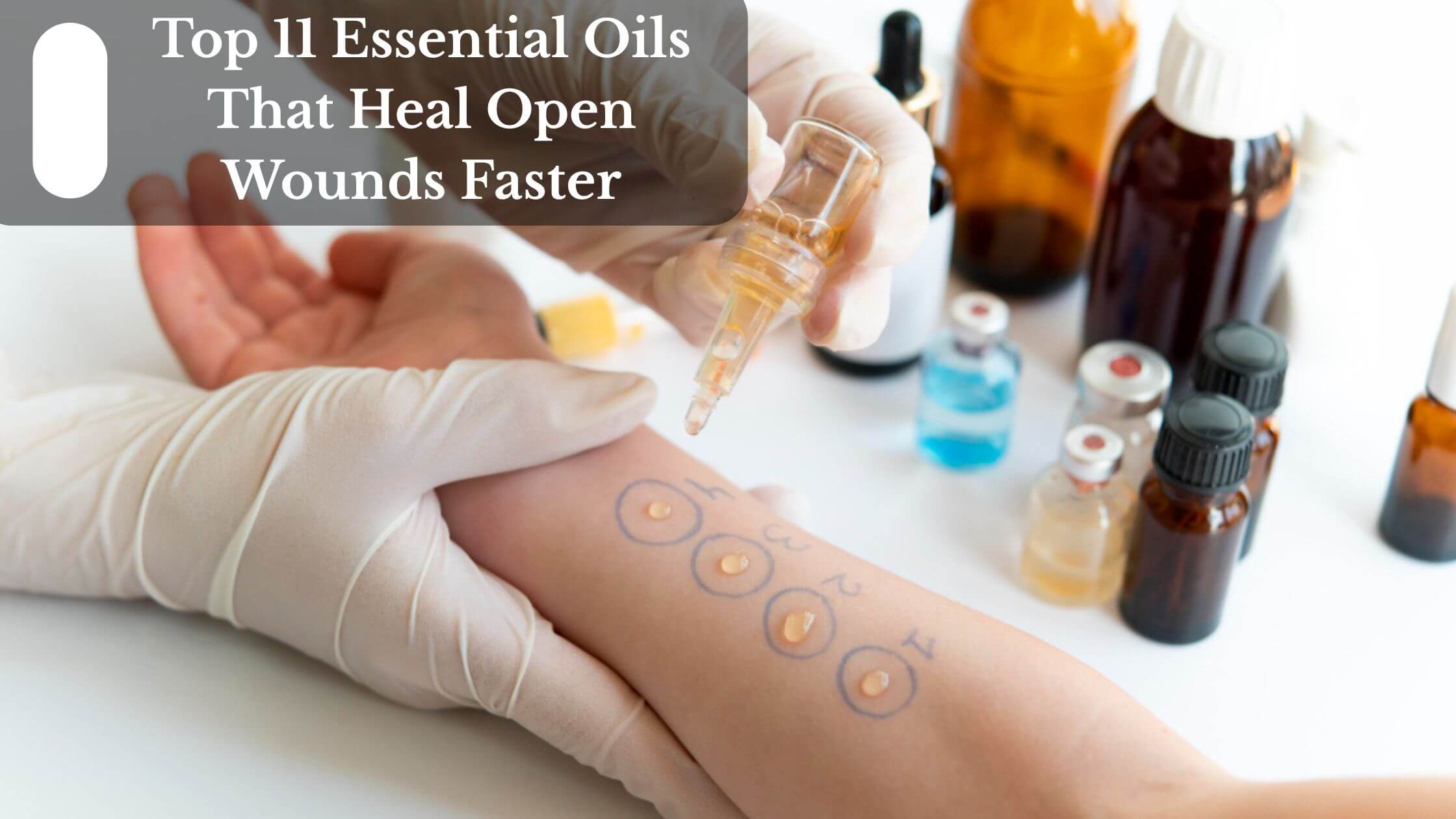
Introduction: Can Essential Oils Heal Open Wounds?
Essential oils have incredible benefits for wounds and scars, apart from aromatherapy and skin care. Many people are unaware that essential oils are strong and effective for healing wounds. Even though open wounds can be tricky to deal with, you can minimise their effects with the best essential oils for open wounds. That is a powerful truth and not a myth. In the upcoming section, we will explore the qualities of essential oils that make them exceptional and ideal for wound healing.
You may also like:
Essential oils are natural plant-based extracts that are packed in an oil form. They are treatments that help repair damaged or compromised skin to promote healing faster. Not only this, but they are quite beneficial as they are packed with anti-fungal, antibacterial, antimicrobial, and anti-inflammatory properties. One should not use it as a substitute for medical care or ointments. It just adds as an additional treatment for open wounds to speed up the healing process. Before using essential oils for open wounds and burns, you should be cautious of the safety constraints. So, let’s dive into them first.
Important Safety Rules Before Using Essential Oils On Wounds
There are some safety rules or precautionary tips that one should follow before using essential oils on open wounds. These points are also applicable if you use essential oils for burns, scrapes, redness, and extreme inflammation.
- Everyone should avoid potent or harsh essential oils as they can trigger a burning and itchy sensation. Some strong oils like oregano, clove, cinnamon, and thyme shouldn’t be used on open wounds.
- Always clean the wound first before applying any topical application or remedy like essential oil. Open wounds are prone to infections, blood, and other particles. Use saline or water to clean.
- The most important tip before using essential oils for open wounds is a patch test. A patch test is very important, even if you are using it in a diluted form.
- Using essential oils directly on the skin or near open wounds can lead to intense irritation, inflammation, or a burning sensation. So, avoid using them directly and only use them after proper dilution.
- If you have a severe wound that is deep into the skin, then consult a doctor instead of using essential oils without consultation.
- Essential oils do not substitute a first aid treatment. So, use it as a supportive remedy instead of the foremost one.
- Suffering from fresh bleeding or burning wounds? Essential oils won’t help here. So do not use it on such kinds of wounds.
Now that you are clear on the precautionary tips to avoid further damage, let’s understand how essential oils benefit your skin for faster recovery.
How Essential Oils Support Faster Wound Healing?
Essential oils are truly effective if you use them properly after consulting with your doctor. But do you know how oils intensify the recovery and healing process to prevent further damage? Well, here are all the reasons that support the healing mechanism of essential oils.
A. No more discomfort or pain with essential oils
If you have essential oils by your side, you’ll not feel intense pain, swelling, redness, or discomfort due to open wounds. Just use the best essential oils like lavender, peppermint, or spearmint to soothe and calm the skin.
B. Regenerates tissue and cells
When the skin is under the wound, it goes through a process of tearing apart tissues and cells. Thankfully, not any. The best essential oils help with the tissue regeneration process within a few uses. It builds new skin, promotes collagen production, and helps in healing wounds faster than ever.
C. Offers anti-inflammatory support
Inflammation is very prominent, especially after open wounds. While it is there for a reason, it deeply affects your skin texture and leads to redness and swelling. The top essential oils for fast wound healing support the skin barrier and reduce inflammation over time.
D. Prevents microbial infection
Did you know that several essential oils like tea tree, peppermint, rosemary, lavender, and Chamomile are packed with anti-microbial properties? These essential oils support the healing process and reduce the risk of further infection around the wounds and scars.
E. Reduces the chances of scarring
If you treat open wounds in a balanced way, it reduces the chances of scars and hyperpigmentation. The top essential oils for hyperpigmentation, like lavender, rosehip, jojoba, and helichrysum, are ideal for long-term scars.
Top 11 Essential Oils That Heal Open Wounds Faster
Are you confused among so many essential oils, back and forth, to select the best ones? Well, we are here to guide with the top picks of essential oils for open wounds. Let’s get started.
1. Tea tree essential oil
One can never get over the holy grail tea tree essential oil for skin, open wounds, inflammation, burns, or scars. Known for its rich anti-microbial and anti-inflammatory properties, it reduces and prevents the chances of further infection in the skin. Additionally, tea tree oil improves the skin texture and puts it in the repair mode.
2. Lavender essential oil
The floral yet herbal fragrance of lavender works in the best way possible for aromatherapy sessions. But, did you know that lavender oil speeds up skin healing and recovery with its oh-so-strong anti-microbial and anti-inflammatory properties? The rich oil also promotes collagen production in the skin, improves the epithelization process, and diminishes swelling, redness, and pain.
3. Roman chamomile oil
Roman chamomile essential oil is the best solution for people with extremely sensitive and traumatized skin. It has incredible properties that heal swelling and redness in the skin without being harsh. Just use roman chamomile oil with a carrier oil to calm irritated and inflamed skin.
4. Frankincense essential oil
If you need an essential oil that works for your entire skin and its disorders, try frankincense oil. It has all the goodness in it with powerful anti-inflammatory and skin-restoring properties. It helps with wound healing, improves skin barrier, and limits scarring. Use it with a combination of the best carrier oils for wounds and lavender oil.
5. Rosemary oil
Rosemary essential oil is a power-packed formula of antimicrobial and anti-inflammatory oils that promote wound healing and support circulation in the body. It is best and shows results when used with carrier oils to tackle inflammation, redness, and swelling.
6. Calendula Oil
Calendula oil or extract has healing botanicals, along with hydrating properties, which are a must-have for all skin concerns. If you are sensitive to wounds and burns, try calendula oil. It is best used for skin irritation, inflammation, open wounds, redness, and tissue regeneration.
7. Geranium oil
Geranium oil is ideal for deep hydration and cell regeneration, especially if it is due to shaving wounds, minor cuts, or burns. You can use geranium oil to prevent inflammation in the skin, reduce bleeding, and improve the skin texture over time.
8. Eucalyptus essential oil
The agitated and intense wounds are usually warm and lead to permanent bleeding patterns. However, with eucalyptus essential oil, you can battle it within a few uses as it offers cooling properties. The essential oil is used for its anti-microbial and anti-inflammatory properties that keep the skin clean, prevent infection, and minimise swelling.
9. Peppermint oil
Cooling essential oils are always the best ones to treat open wounds because of their instant cooling properties. Peppermint oil is one of them, which has menthol in it, that offers natural relief from burns, cuts, and wounds.
10. Myrrh oil
Myrrh oil keeps your skin clean and saves you from further wounds and bacterial infection. It is one of the best essential oils, as stated by science-backed studies and research. The essential oil protects your skin, helps in smooth and speedy recovery, while giving antiseptic effects.
11. Cistus essential oil
Have you heard of rock rose essential oil, also known as Cistus oil? This less-famous, but very strong, essential oil for wound healing does wonders for your skin. It naturally prevents shallow cuts in the skin, improves the skin barrier, and supports tissue and cell turnover.
How To Use Essential Oils Safely On Open Wounds?
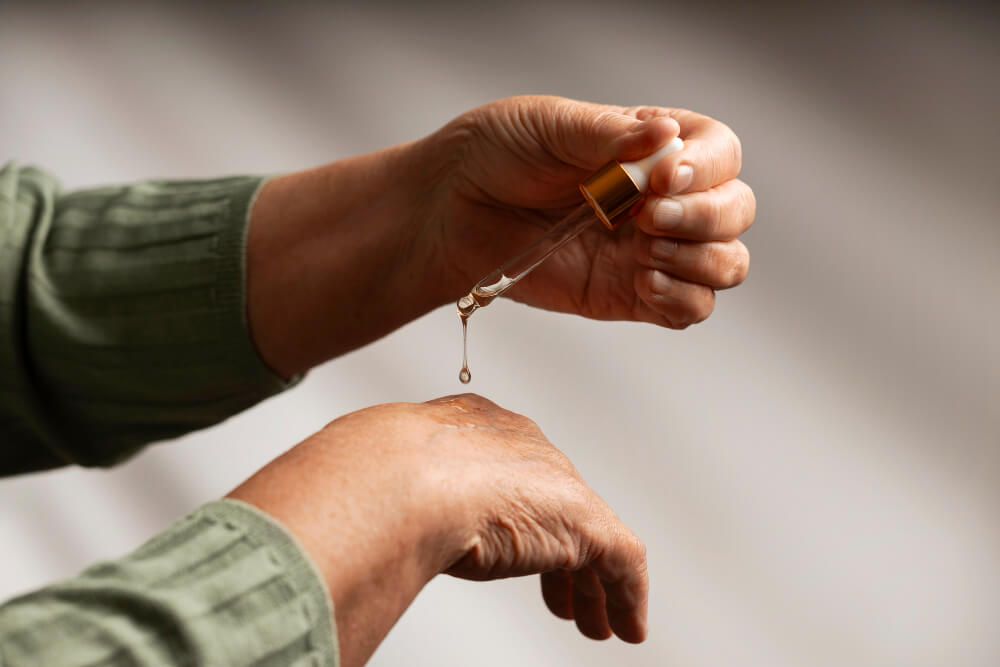
If you are confused about how to use essential oils for open wounds, then these methods work perfectly and do not trigger any side effects.
A. Essential oils with aloe vera gel
One of the best methods to use essential oils safely on wounds or nearby skin is to combine them with aloe vera gel. Mix aloe vera gel with one or two drops of essential oil to reduce pain and soothe the skin.
B. Saline wash
Saline wash is a must as it prevents the chances of further infection. So, wash the wound with saline first and then use a diluted form of essential oil to protect.
C. Compress
You can also use a cold compress near the affected area, combined with essential oils to calm skin inflammation and irritation.
D. Essential Oils Diluted
Using essential oils in a diluted form, particularly with a carrier oil, is the best way possible to get rid of swelling and redness.
What NOT To Do When Using Essential Oils On Open Wounds
If you are using pure essential oils for open wounds, you must keep these things in mind.
- Always dilute the essential oils before usage
- Avoid strong and potent oils like wintergreen, clove, and cinnamon.
- Never apply essential oils directly to the wound or a bleeding wound.
- Do not apply oils around the band-aid area.
- Combining two or more essential oils can create a fuzz in your skin. So, avoid that completely.
- Always take professional advice before using essential oils on wounds, particularly surgical ones.
When To Avoid Essential Oils And See A Doctor
Even though essential oils are very effective and can show results within a week of usage, one should not take doctors for granted.
- It is important to consult a doctor and avoid essential oils in such situations –
- If the wound is bleeding time in again even after essential oil application.
- The wound is quite deep and has redness.
- Pain is unbearable and does not go away.
- The skin is turning worse than before.
- The skin is filled with pus and smells near the wounds.
You may also like:
Conclusion
Essential oils are a blessing, especially if your skin needs its dose. However, it can also lead to problematic conditions if you’re using adulterated ones. So it becomes very important to cross-check the quality aspects of essential oils before using them on your skin.
At Moksha Lifestyle, you’ll get 100% pure, high-quality, steam-distilled essential oils that are safe for medical uses after a medical consultation.
FAQs
1. How to heal a wound in 3 days?
- To heal wounds fast or in 3 days, keep these things in mind.
- Get a dressing done and change it after 24 hours.
- Clean the infected area properly to prevent further infection.
- Use essential oils for open wounds to prevent further outbreaks.
2. What essential oil heals wounds fast?
The best essential oils that heal wounds fast are chamomile, Tea tree, lavender, bergamot, and Myrrh.